A Quality Management System (QMS) is a structured set of policies, processes, and procedures designed to ensure that an organization consistently meets customer requirements and achieves quality objectives.
It forms the backbone of organizational quality assurance, enabling businesses to document, control, and continually improve their operations.
Effective implementation of a QMS can transform the way an organization functions by promoting uniformity, accountability, and a culture of continuous improvement within its teams.
The primary purpose of a QMS is to coordinate and direct organizational activities to satisfy customer and regulatory demands, optimize efficiency, and minimize mistakes and waste.
By defining clear standards and responsibilities, a QMS streamlines workflows, facilitates data-driven decision-making, and ensures compliance with relevant regulations.
This results in consistent quality output, reduced operational costs, and increased trust and satisfaction among customers and stakeholders.
Advantages of QMS
The integration of a QMS supports long-term success through process consistency and continual improvement. The list below outlines some of its primary benefits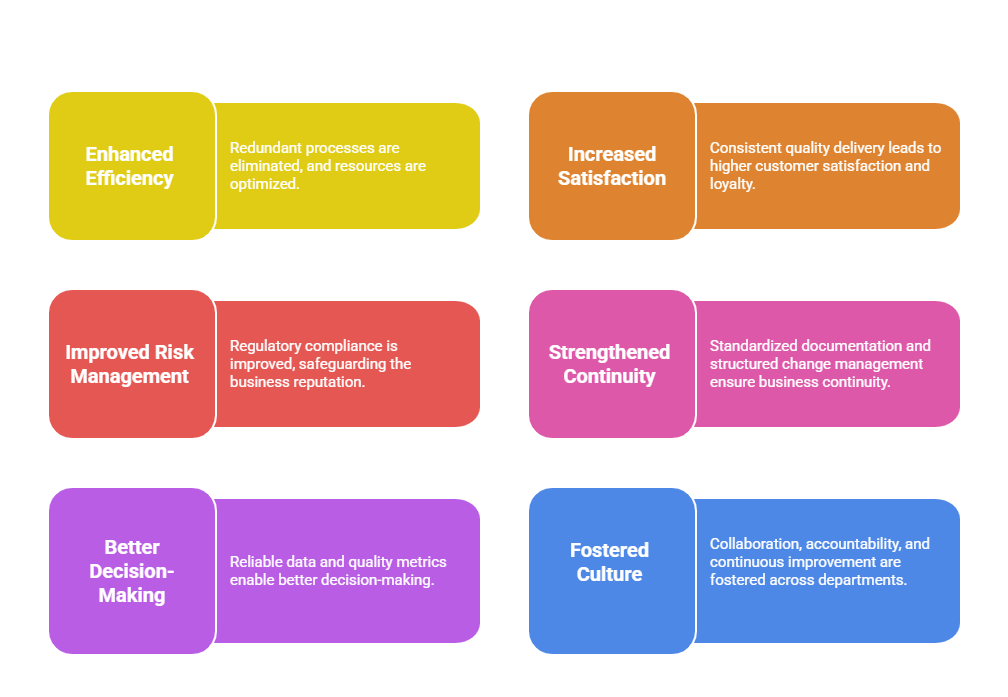

Class Sessions
Sales Campaign

We have a sales campaign on our promoted courses and products. You can purchase 1 products at a discounted price up to 15% discount.