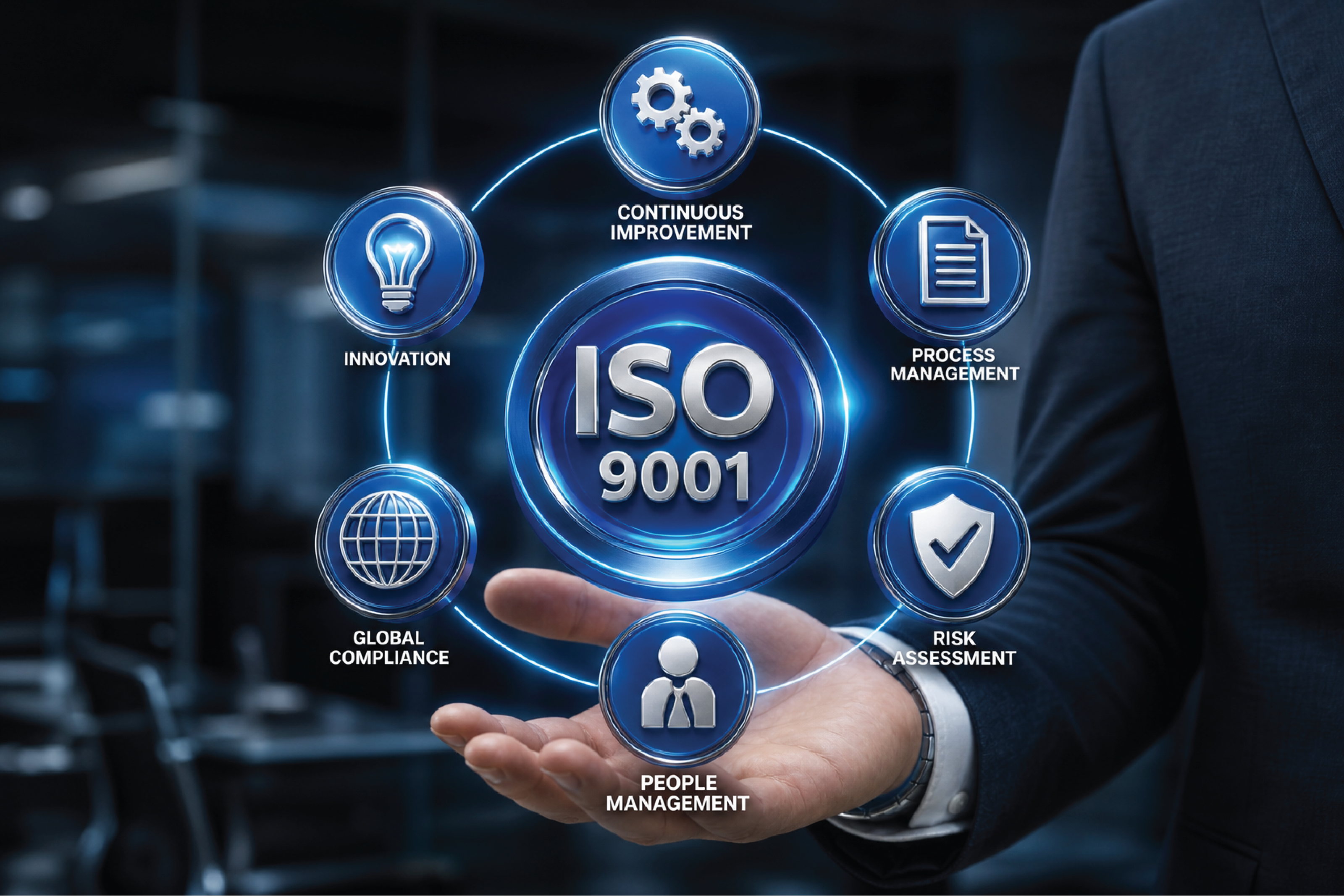
ISO 9001 Lead Implementer Professional Course Online
in Quality ManagementWhat you will learn?
Understand ISO 9001 requirements and QMS fundamentals
Plan and lead QMS implementation projects within an organization
Establish robust QMS documentation and operational controls
Integrate risk management and continuous improvement into the QMS
Conduct and oversee internal audits aligned with ISO 9001
Prepare for and support certification, maintaining system effectiveness
About this course
Companies across the world are under pressure to deliver consistent, high-quality products and services. That's where ISO 9001 comes in.
ISO 9001 is the world's recognized Quality Management System (QMS) standard. Over one million organizations in 190 countries hold this certification. (Source: SGS, 2025)
If you want to lead quality management projects, the ISO 9001 Lead Implementer course is built for you. It teaches you how to plan, build, and run a QMS from scratch.
This guide will help you understand who this course is for, what jobs it opens up, how much you can earn, and why this skill is in high demand right now.
Ideal Candidates for the ISO 9001 Lead Implementer Course and Key Learning Outcomes
This course is designed for working professionals who deal with quality, compliance, or operations. You don't need to be a quality expert to start. But a basic understanding of ISO management systems helps.
The ISO 9001 lead implementer training is ideal for:
1. Quality managers and quality assurance professionals.
2. Operations and compliance officers.
3. Project managers handling ISO implementation projects.
4. Consultants advising businesses on quality systems.
5. Professionals who want to transition into quality management careers.
6. Technical experts looking to move into QMS leadership.
The ISO 9001 lead implementer course covers everything from understanding the standard to running a full implementation project. Here is a quick look at what you walk away with:
| Skill You Build | Why It Matters at Work |
| Reading ISO 9001 requirements | You understand exactly what an audit looks for |
| Planning a QMS project | You can lead the full rollout from day one |
| Risk identification techniques | You spot problems before they affect customers |
| Preparing for external audits | You get the organization ready with confidence |
| Measuring and improving systems | You keep the QMS improving over time |
The online ISO 9001 lead implementer training course is flexible. You can study at your own pace. Most programs run over five days of structured content, followed by a certification exam.
Once you pass, you earn an internationally recognized credential like the PECB Certified ISO 9001 Lead Implementer. (Source: PECB, 2025).
Career Options After Completing the ISO 9001 Lead Implementer Course
Completing an ISO 9001 QMS lead implementer training course puts you in a strong position across many sectors. Manufacturing, healthcare, automotive, IT, food production, logistics; they all need people who can run quality systems.
Here are the roles you can realistically go after once you are certified:
1. QMS Implementation Lead — you take charge of building the system end to end.
2. Quality Assurance Manager — you oversee quality standards across teams.
3. Compliance Manager — you make sure the company stays within regulatory rules.
4. ISO Project Manager — you run certification projects from planning to audit.
5. Quality Consultant — you advise businesses that need QMS help from outside.
6. Process Improvement Specialist — you look for inefficiencies and fix them.
7. Internal or External Auditor — you review and assess quality systems.
ISO 9001 is not going anywhere. It accounts for roughly 46% of all management system certifications issued worldwide. (Source: 360 Research Reports, 2025)
That number tells you something important. Organizations keep renewing, upgrading, and newly adopting this standard. Every time they do, they need someone qualified to guide the process.
There is also a growing freelance side to this. Many certified professionals build their own client base. They come in, implement the QMS, get the company audit-ready, and move on to the next client. Some earn more this way than in a full-time role.
Income Opportunities with ISO 9001 Lead Implementer Certification
Pay varies by country, industry, and how much experience you carry. But the numbers are solid, especially once you have a few implementations under your belt.
| Role | Location | Typical Annual Pay |
| ISO Lead Implementer / Auditor | USA | $77,000 – $103,000 |
| Top earners (USA) | USA | Up to $147,000 |
| Quality Manager (ISO certified) | USA | $82,000 avg. |
| Quality / QA Manager | UK | £35,000 – £65,000 |
| Quality Consultant | Canada | CAD 70,000 – 95,000 |
| Quality Manager | Australia | AUD 90,000 – 120,000 |
If you are starting out in the US, expect somewhere between $65,000 and $80,000 to start. That tends to climb quickly once you lead a couple of live implementation projects.
Senior QMS leads and consultants at larger companies regularly pull in over $130,000 a year. Location pushes pay up too. Cities like Washington D.C., Cupertino, and New York tend to pay more than national averages. (Source: ZipRecruiter, Dec 2025)
One more thing worth knowing is consultants who go independent often charge daily or project rates. A single ISO 9001 implementation project can take three to twelve months. Fees for those engagements can run well into five figures.
Job Market Outlook for ISO 9001 Lead Implementer Professionals
The global QMS certification services market sits at $14.13 billion in 2025. It is growing at 11.8% per year and expected to keep that pace through 2033. (Source: Data Insights Market, 2025)
Quality management software, the tools that support QMS is on a similar track. That market is projected to hit $31.54 billion by 2034. (Source: Fortune Business Insights, 2025)
That is not just growth. That is sustained, sector-wide investment in quality. And every rupee, dollar, and pound spent on that growth needs qualified people to make it work.
Here is what is actually driving demand right now:
1. ISO 9001 is being revised. The updated version is expected to land in September 2026. When a major revision drops, organizations scramble to update their systems — and they need implementers. (Source: SGS, 2025)
2. Global adoption keeps climbing. Over 2.1 million organizations now hold at least one ISO certification — up 7.8% in a single year. (Source: 360 Research Reports, 2025)
3. Supply chains are under pressure. 82% of manufacturers say ISO 9001 is a key tool for supply chain transparency. That figure alone tells you how embedded this standard is. (Source: 360 Research Reports, 2025)
4. Emerging markets are accelerating fast. India's ISO certification market is growing at 16.4% per year. China, Southeast Asia, and parts of Africa are following a similar path. (Source: 360 Research Reports, 2025)
5. Regulated industries keep expanding. Healthcare, food, auto, and aerospace — these sectors are not shrinking. They all require QMS certification to operate. That means permanent, ongoing demand for skilled implementers.
6. 61% of organizations in developing economies adopted at least one ISO framework between 2023 and 2025. (Source: 360 Research Reports, 2025)
The ISO 9001 Lead Implementer certification puts you right where that demand sits. Not on the edges of quality work — right at the center of it.
Online access has also removed the barriers. You no longer need to book a week off work and travel to a training center. The course comes to you. You fit it around your schedule. And when you pass, you hold the same credential as someone who sat in a classroom.
Final Thoughts
The ISO 9001 Lead Implementer certification is one of those qualifications that ages well. The job market for quality professionals is not shrinking. It is growing, steadily, globally, and across industries that are not going anywhere.
You learn a skill that companies genuinely need. You bring something concrete to the table. Not just knowledge of a standard — but the ability to take a blank page and build a working quality system from scratch.
The pay is fair. The career paths are wide. And with a new ISO 9001 revision on the horizon in 2026, the timing could not be better.
If you have been sitting on the fence about enrolling in the ISO 9001 QMS lead implementer training course online, this is a good moment to take the next step.
Tags
ISO 9001 Quality Management System Lead Implementer Course
ISO 9001 Lead Implementer Course
ISO 9001 QMS Lead Implementer Course
ISO 9001 QMS implementation course
ISO 9001 quality management system course
ISO 9001 lead implementer training
ISO 9001 QMS training course
Learn ISO 9001 QMS lead implementation
ISO 9001 implementation course for organizations
ISO 9001 training course for managers
ISO 9001 Lead Implementer
Related Courses


Comments (0)
A QMS provides a formalized framework to achieve consistent quality and customer satisfaction while driving continuous improvement. It streamlines operations, reduces risks, and supports business growth for lasting success.
ISO 9001 has evolved from military supplier standards into a universal, risk-based management system guiding quality practices worldwide. Its revisions reflect progress, flexibility, and the pursuit of continuous improvement in organizations.
Core QMS principles—customer focus, leadership, process approach, improvement, and evidence-based decisions—establish a strong foundation for achieving sustained quality. Consistent use of QMS terminology and practices ensures better teamwork, effective problem-solving, and ongoing customer satisfaction.
The High-Level Structure organizes ISO 9001 into 10 integrated clauses, supporting seamless system integration, clarity, and improvement. It guides organizations by aligning QMS implementation with the PDCA cycle, enabling efficient and sustainable quality management.
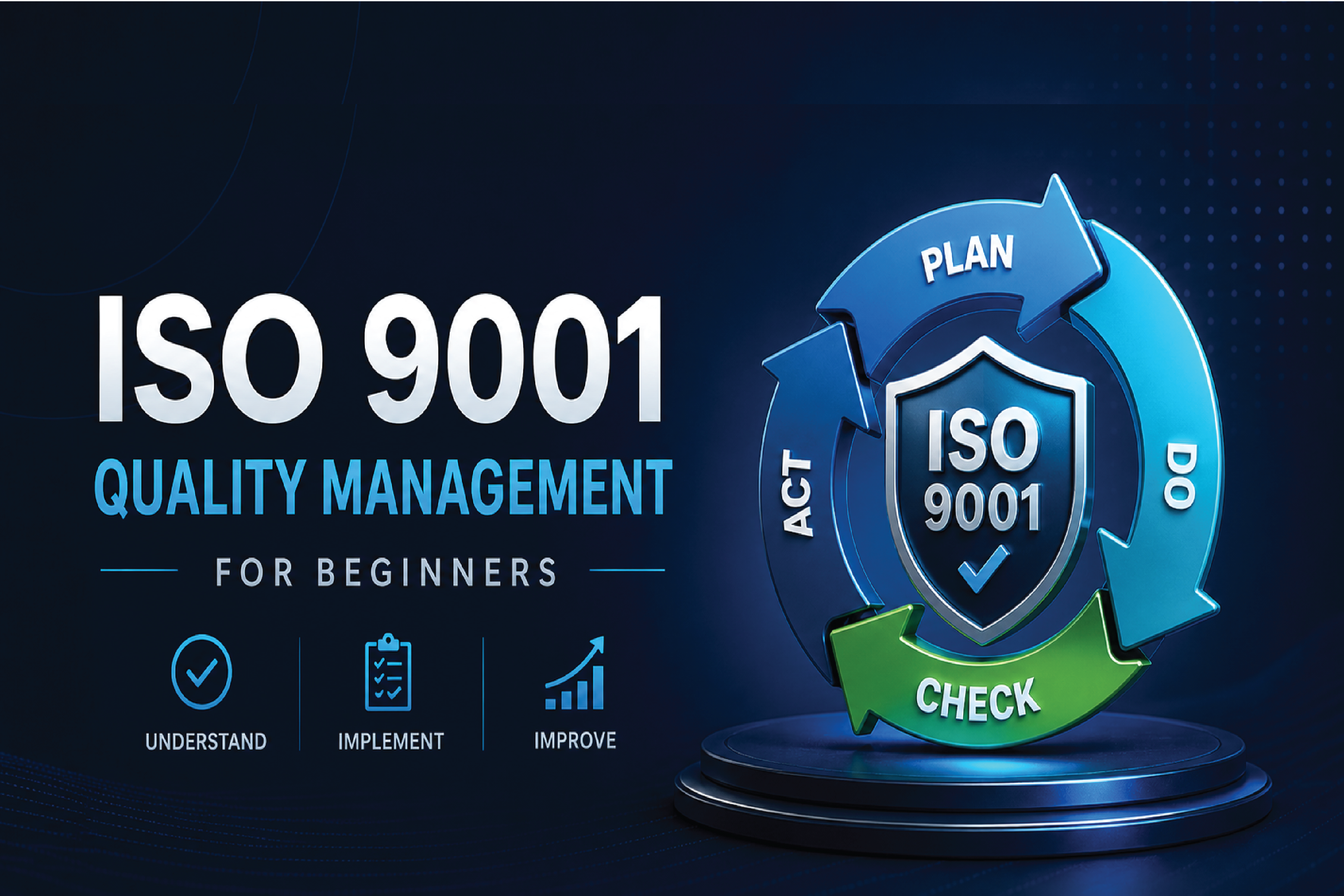
The PDCA cycle guides organizations through structured planning, action, review, and improvement for ongoing quality and performance gains. Its repetitive approach builds the foundation for continuous improvement within every QMS.
ISO 9001:2015 provides a flexible quality framework with broad applicability and clear advantages, though implementation scope and process focus create some limits. Organizations benefit through higher efficiency, customer trust, and continual improvement while addressing quality challenges in their own context.
Strong implementation teams are crucial for ISO 9001 success, combining leadership support, cross-functional skills, and clear responsibilities. Regular communication and resource planning empower teams to achieve quality management objectives efficiently.
Gap assessment identifies the difference between current practices and ISO 9001 requirements, forming the baseline for quality management system development. This enables targeted planning, prioritization, and continuous improvement during implementation.
A well-structured implementation roadmap organizes ISO 9001 adoption through planning, training, process rollout, and continual improvement. It aligns resources and stakeholders to build a sustainable and effective quality management system.
ISO 9001 mandates key documents like the quality policy, objectives, and documented procedures, supplemented by records supporting effective QMS operation and control. Proper document control ensures information accuracy and availability, underpinning consistent quality management and compliance.
Process mapping offers a visual workflow overview, while procedures provide detailed steps, and policies articulate quality commitments within ISO 9001 QMS. Together, they ensure clarity, consistency, and continual improvement in quality management.
ISO 9001 requires controlled document and records management to maintain accuracy, accessibility, and traceability of quality information. Effective control systems prevent errors, support audits, and enable continual improvement within the QMS.
Clearly defined operational processes and quality objectives align daily activities with strategic goals, enabling consistent quality and efficiency under ISO 9001. This focus enhances customer satisfaction, reduces risks, and drives continuous improvement for long-term business success.
Resource management ensures organizations provide competent people, proper infrastructure, and supportive environments essential for effective QMS operation under ISO 9001. This strategic focus drives quality consistency, continual improvement, and customer satisfaction.
Monitoring performance tracks QMS effectiveness against objectives, using data and audits to highlight strengths and areas for improvement. Improvement processes act on these insights to correct issues and drive ongoing quality enhancements aligned with ISO 9001.
Integrating risk management with QMS embeds proactive risk-based thinking across ISO 9001 processes, promoting resilience and continual improvement. This approach enables organizations to mitigate threats and seize opportunities, enhancing quality and business success.
Identifying and assessing risks and opportunities enables organizations to prioritize quality and operational challenges proactively while leveraging growth potential. This structured approach enhances decision-making and supports continuous improvement within ISO 9001 QMS.
Risk controls and mitigation plans in ISO 9001 systematically reduce or manage quality risks through tailored strategies like treating, accepting, transferring, or avoiding risks. Effective integration of these controls ensures continuous improvement and operational resilience within the QMS.
An effective audit program design systematically plans and manages internal audits, focusing on scope, frequency, criteria, and competent auditors to ensure QMS compliance and continual improvement. This structured approach helps organizations detect gaps early, facilitate corrective actions, and reinforce a culture of quality accountability.
QMS internal audits systematically assess compliance and effectiveness of quality processes, driving early issue detection and continuous improvement. They foster a culture of accountability and readiness for external ISO 9001 certification audits.
Handling audit findings involves documenting nonconformities, performing root cause analysis, and implementing corrective actions to resolve issues and prevent recurrence in ISO 9001 QMS. This process enhances system effectiveness, supports compliance, and promotes continuous quality improvement.
Successful ISO 9001 audit preparation involves thorough documentation review, internal audits, corrective actions, and staff readiness to ensure compliance and smooth certification. Proactive preparation builds confidence, minimizes risks, and supports lasting quality management success.
Responding to ISO 9001 audit results involves analyzing findings, implementing corrective actions, verifying effectiveness, and documenting outcomes to sustain QMS compliance. Continuous monitoring and management review ensure ongoing adherence and foster a culture of improvement.
QMS principles guide continual improvement by promoting customer focus, leadership, engagement, process management, and data-driven decisions. Systematic use of PDCA and improvement tools fosters operational excellence, innovation, and sustained customer satisfaction.