Resource management and support are fundamental pillars of an effective ISO 9001 Quality Management System (QMS).
Properly managing resources ensures that an organization has the necessary human skills, infrastructure, environment, monitoring tools, and organizational knowledge to consistently meet quality requirements and enhance customer satisfaction.
Without adequate resources, even the best-designed quality systems can falter, leading to inefficiencies, nonconformities, and customer dissatisfaction.
Purpose of Resource Management in ISO 9001
ISO 9001:2015 Clause 7.1 mandates organizations to determine and provide all resources necessary for establishing, implementing, maintaining, and continually improving their QMS.
This includes assessing current and future resource needs, identifying gaps, and acquiring additional resources as needed. Resources broadly encompass:
1. People: Competent personnel with the right skills, training, and awareness to perform their roles effectively.
2. Infrastructure: Physical facilities, workspace, equipment, hardware, and software necessary to support processes and product realization.
3. Work Environment: Factors influencing process effectiveness, such as temperature, humidity, cleanliness, lighting, and ergonomics.
4. Monitoring and Measurement Resources: Tools and devices used to measure product conformity and process performance, requiring calibration and maintenance.
5. Organizational Knowledge: Information and expertise necessary to maintain process consistency, reduce risks, and foster innovation.
Key Aspects and Benefits
Effective quality management requires attention to specific operational and human factors. Below is a list of the main aspects that drive organizational improvement and their benefits.
| Aspect | Benefit |
| Competence and Training | Ensuring staff competence through education, training, skills development, and experience. Training effectiveness is monitored to confirm that roles are performed correctly. |
| Infrastructure Maintenance | Regular maintenance and updates of equipment and facilities prevent downtime and ensure consistent quality output. |
| Healthy Work Environment | Providing a safe and supportive workplace minimizes errors and promotes employee well-being and productivity |
| Reliable Measurement Systems | Accurate monitoring and measuring instruments enable confident decision-making and strengthen quality assurance. |
| Organizational Knowledge Management | Retaining and sharing knowledge prevents expertise loss and fosters continuous, sustainable improvement. |
Implementation Tips
Optimizing resources plays a vital role in maintaining consistent quality and organizational efficiency. Below is a list of useful implementation tips to strengthen resource management practices.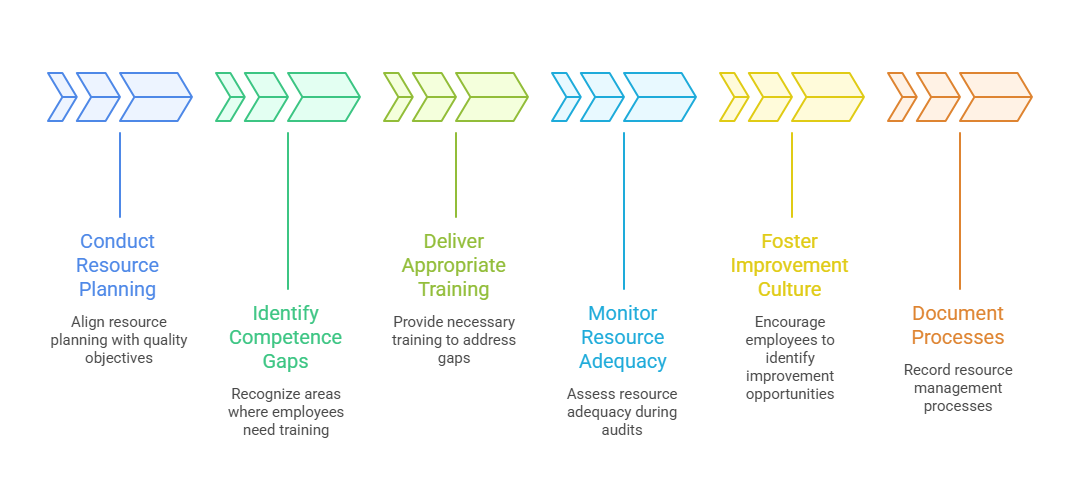
By optimizing resource management and providing effective support, organizations enhance operational readiness, reduce risks, promote consistent quality output, and gain a competitive advantage through higher customer satisfaction.

Class Sessions
Sales Campaign

We have a sales campaign on our promoted courses and products. You can purchase 1 products at a discounted price up to 15% discount.