Setting operational processes and objectives is a critical aspect of implementing an effective Quality Management System (QMS) under ISO 9001. These activities define the day-to-day workings of an organization, ensuring that all functions and tasks align with the overarching quality goals.
Establishing clear objectives and well-structured operational processes helps in achieving consistent product and service quality, improving efficiency, reducing errors, and driving continual improvement.
Purpose of Setting Operational Processes and Objectives
Operational processes are the detailed sequences of activities that transform inputs into products or services. Defining these processes provides clarity on responsibilities, resource allocations, workflows, and performance indicators.
Objectives, on the other hand, set measurable goals related to quality, customer satisfaction, productivity, or compliance, providing a basis for evaluation and improvement.
By Formalizing Operational Processes and Objectives, Organizations Can:
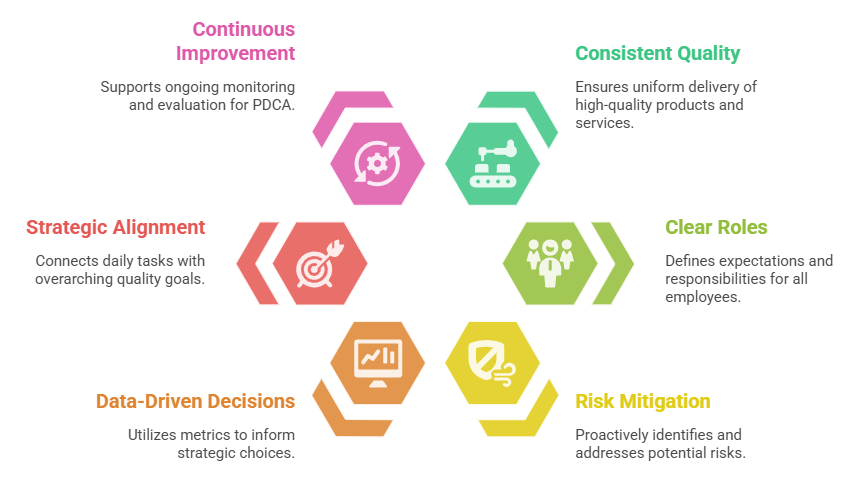
Benefits of a Quality Management System through Operational Focus
| Benefit | Description |
| Improved Efficiency | Standardized processes reduce variability and redundant activities, enabling smoother workflows and faster turnaround times. |
| Higher Customer Satisfaction | Consistently meeting quality objectives enhances customer confidence, retention, and positive referrals. |
| Risk Reduction | Defined processes help identify potential failure points early, enabling preventive actions and minimizing costly errors. |
| Regulatory Compliance | Documented processes ensure adherence to legal and regulatory requirements, supporting audits and certifications. |
| Employee Engagement | Clear objectives and processes define expectations and empower employees to work towards common goals. |
| Continuous Improvement | Regular evaluation of performance and objectives drives innovation, refinement, and adaptability to changing needs. |
Implementation Tips
A well-organized approach to QMS implementation helps maintain consistency and accountability across operations. Below are practical recommendations to ensure success.
1. Establish SMART (Specific, Measurable, Achievable, Relevant, Time-bound) quality objectives.
2. Map critical operational processes, highlighting key controls and interfaces.
3. Assign process ownership and responsibilities.
4. Develop procedures and work instructions as necessary to guide consistent execution.
5. Monitor process performance with relevant KPIs.
6. Review and adjust objectives regularly in management reviews.
By setting solid operational frameworks complemented by clear objectives, an organization creates a stable foundation for achieving quality excellence and sustainable success.

Class Sessions
Sales Campaign

We have a sales campaign on our promoted courses and products. You can purchase 1 products at a discounted price up to 15% discount.