Preparing for ISO 9001 certification audits is a crucial phase that sets the stage for successfully achieving recognized quality management certification.
Proper preparation ensures that your organization not only meets ISO 9001 requirements but is also confident and organized during external audits.
This formal, systematic approach involves thorough review, employee engagement, documentation readiness, and addressing any gaps proactively.
Key Aspects of Preparing for ISO 9001 Certification Audits
Systematic audit readiness activities help eliminate surprises and strengthen overall compliance performance. The list below highlights key factors to address when preparing for ISO 9001 certification.
1. Review Documentation: Start by ensuring all QMS documentation—quality manuals, procedures, records, policies, and work instructions—are current, complete, and reflect actual practices. This helps auditors verify compliance and operational consistency.
2. Conduct Internal Audits: Performing comprehensive internal audits prior to the certification audit identifies nonconformities, system weaknesses, and implementation gaps. Addressing these issues early minimizes surprises and builds confidence.
3. Corrective Actions: Where internal audits or gap assessments find problems, implement corrective actions promptly and verify their effectiveness. Demonstrating commitment to continual improvement aligns with ISO 9001 principles.
4. Employee Briefing and Training: Prepare personnel by briefing them on audit objectives, process requirements, and expected behaviors. Well-informed employees who understand their roles and can provide evidence effectively facilitate smooth audits.
5. Gather Evidence: Organize records, reports, and objective evidence that demonstrate the QMS effectiveness, such as corrective action logs, monitoring results, management reviews, and customer feedback.
6. Coordinate with Certification Body: Confirm audit schedules, understand auditor requirements, and prepare logistical arrangements. Being organized helps auditors focus on assessing your QMS thoroughly without disruptions.
7. Prepare Physical and Digital Environments: Ensure work areas are neat, systems (digital or paper-based) are accessible, and obsolete or uncontrolled documents are removed to present an orderly system.
8. Simulate Audit Scenarios: Conduct mock audits or walkthroughs to identify potential questions or concerns and make adjustments accordingly.
Benefits of Thorough Preparation
Well-planned audit preparation benefits both operational performance and organizational confidence. Below are the key advantages of adopting a disciplined approach to readiness.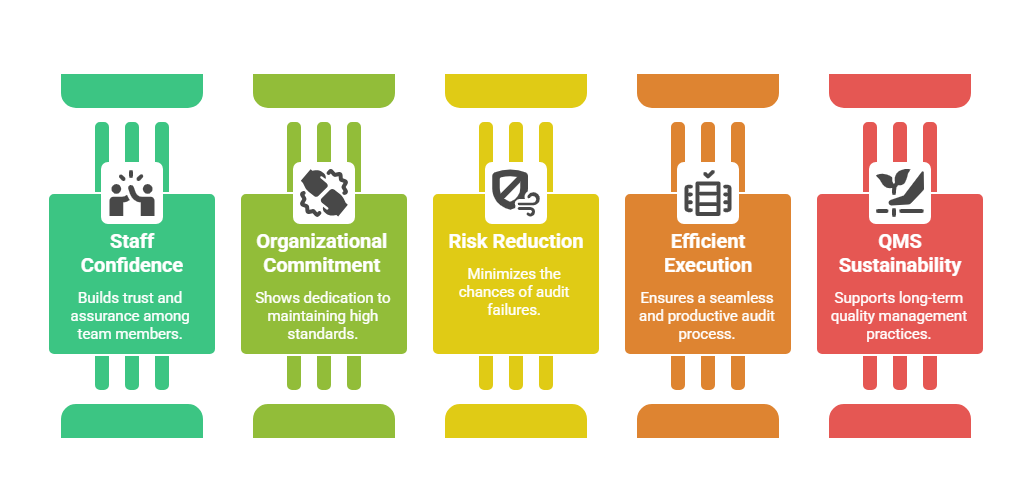

Class Sessions
Sales Campaign

We have a sales campaign on our promoted courses and products. You can purchase 1 products at a discounted price up to 15% discount.