The audit program is an overarching plan that defines how internal audits will be conducted throughout the organization’s audit cycle. It includes the scheduling, scope, frequency, and resources required for audits to ensure all components of the QMS are appropriately monitored.
Well-structured programs prioritize high-risk or critical areas, consider changes in organizational processes, and ensure coverage of all relevant quality areas over time. The design must be flexible to adapt to operational changes while maintaining consistent quality assurance.
Key Components of an Effective Audit Program
To ensure audit consistency and value, organizations must design programs with clarity, competence, and measurable outcomes. The list below highlights the major elements involved.
1. Audit Scope: Clearly define what will be audited, such as specific departments, processes, or functions. The scope should cover mandatory areas dictated by ISO 9001, as well as organizational priorities.
2. Audit Frequency: Determine how often each area will be audited based on risk, complexity, results of previous audits, and changes in processes or regulations. High-risk areas require more frequent audits.
3. Audit Criteria: Establish the standards, policies, procedures, and regulatory requirements that the audit will verify compliance against.
4. Selection of Auditors: Assign competent, impartial auditors who understand the QMS processes and auditing techniques to ensure objective assessments.
5. Audit Schedule: Develop a detailed calendar specifying dates, auditees, audit teams, and timelines for preparation, execution, and reporting. Coordination with department availability is essential.
6. Resources and Tools: Ensure auditors have access to documented information, checklists, measurement tools, and communication channels necessary for effective audits.
7. Reporting and Follow-up: Define mechanisms for documenting findings, categorizing nonconformities, recommending corrective actions, and monitoring the implementation and effectiveness of these actions.
8. Continuous Improvement: Incorporate feedback from audit outcomes into the QMS management review process, allowing the organization to refine both the audit program and the management system continuously.
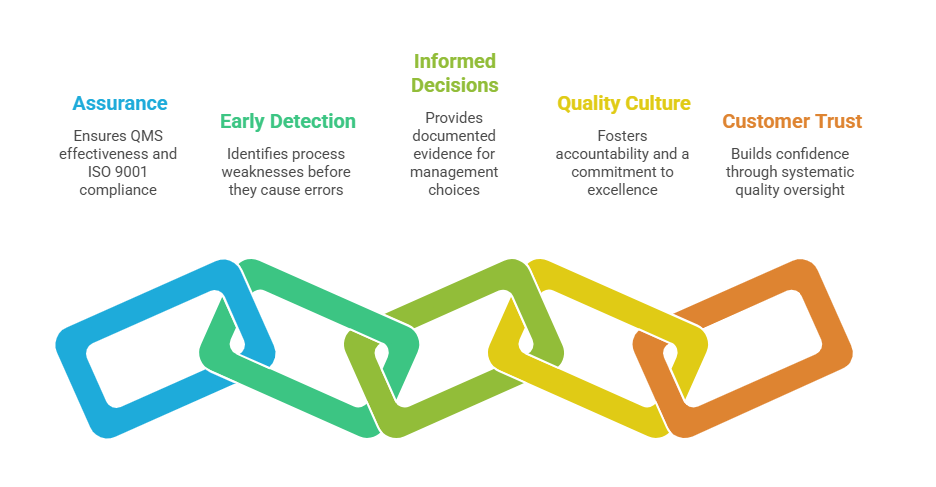
Benefits of a Well-Designed Audit Program
Below are the principal benefits of implementing a well-designed audit program.

Class Sessions
Sales Campaign

We have a sales campaign on our promoted courses and products. You can purchase 1 products at a discounted price up to 15% discount.