ISO 9001 Quality Management Course for Beginners
in Quality ManagementWhat you will learn?
Explain the purpose and structure of ISO 9001
Identify and apply the seven Quality Management Principles
Outline the key requirements of ISO 9001:2015
Recognize steps for implementing, monitoring, and improving a QMS
About this course
Nobody really plans to work in quality management. You fall into it, or a manager spots something in you and says, 'you'd be good at this.' Either way, once you're in it, you realise quickly there's a lot more going on than you first thought.
ISO 9001 is the standard that most quality systems are built on. Over a million businesses in more than 170 countries use it. If you want to work in quality, properly knowing ISO 9001 isn't a bonus. It's the starting point.
Taking a quality management course that covers ISO 9001 is the most direct way to get there. This post covers what the course teaches, what jobs it leads to, what those jobs pay, and why the demand for this skill is genuinely growing right now.
Ideal Candidates for Quality Management Course and Key Learning Outcomes
It's for almost anyone who deals with processes, products, or teams, which is most working people, when you think about it. You don't need an engineering background.
You don't need years in a specific industry. Some of the best quality managers out there started in completely different fields.
This course tends to work well if you're:
1. New to work and want something solid to put on your CV.
2. Already in a quality role but without any formal training behind you.
3. Running a small business and working toward ISO 9001 certification.
4. A team leader who keeps getting pulled into quality problems.
5. Changing careers and want something that's in demand and stable.
| What You Learn | Why It Matters |
| The ISO 9001:2015 standard — what each clause means and how they connect | You can read and work with the standard without needing someone to translate it for you |
| Risk-based thinking across processes | You spot problems early, before they turn into bigger headaches |
| Writing procedures, policies, and work instructions | Your documentation holds up in an audit — it doesn't fall apart at the first question |
| Planning and running an internal audit | You can check your own systems and find the gaps before an external auditor does it for you |
| Root cause analysis and fixing problems properly | You stop patching the same issue over and over and actually resolve it |
| Continual improvement — day to day, not just on paper | You make real changes at work, not just tick boxes on a form |
What makes these quality management courses useful is that they're practical. The goal isn't to recite a standard. It's to know how to use it, which is what your employer will actually care about.
Professional Opportunities You Can Pursue Post Quality Management Course
This is one of the few qualifications that works in almost any industry. Healthcare, construction, food, software, manufacturing — ISO 9001 runs across all of them.
Once you know it, you're not tied to one sector for the rest of your career. That's genuinely useful flexibility.
Here are the roles that courses for quality management typically lead to:
1. Quality Assurance Analyst
What You'd Be Doing: Checking that products, services, and processes hit the required standard before reaching the customer.
Where the Jobs Are: Manufacturing, Tech, Food & Drink
2. Quality Manager
What You'd Be Doing: Running the quality system, leading audits, managing the team that keeps it all working day to day.
Where the Jobs Are: Healthcare, Engineering, Retail
3. Internal Auditor
What You'd Be Doing: Auditing your own organisation's processes to check they're working as they should.
Where the Jobs Are: Finance, Utilities, Construction
4. Compliance Officer
What You'd Be Doing: Making sure the business meets its legal and regulatory responsibilities and can prove it.
Where the Jobs Are: Banking, Pharma, Government
5. Quality Engineer
What You'd Be Doing: Looking at defects and production data to find where quality is being lost and what's causing it.
Where the Jobs Are: Automotive, Aerospace, Electronics
6. Operations Manager
What You'd Be Doing: Overseeing daily operations and making sure quality systems are actually being followed on the ground.
Where the Jobs Are: Logistics, FMCG, Energy
The cross-industry angle is worth stressing. A quality manager who starts in food can move into construction, then into healthcare later on. The core knowledge doesn't change, only the context does. That kind of career flexibility is hard to find in most other fields.
There's also a clear next step once you've completed courses on quality management at this level. Many people go on to take the ISO 9001 quality management system lead auditor course, which lets you audit other organisations, not just your own.
From there, ISO 14001 (environmental management), ISO 45001 (health and safety), and Six Sigma Green or Black Belt all build naturally on what you already know. Each one adds to your value and opens doors to more senior roles.
Income Opportunities After Finishing a Quality Management Course
Quality management pays well. Better than most people expect when they start looking into it. The numbers below are from ZipRecruiter, Glassdoor, and Indeed (all 2025).
These are US figures, but the UK, Australia, and Canada are all strong markets for this skill too.
| Job Role | Starting Out (USD) | Mid Career (USD) | Senior Level (USD) |
| Quality Manager | $60,000 – $68,000 | $82,000 – $90,000 | $110,000 – $125,000+ |
| ISO 9001 Lead Auditor | $55,000 – $65,000 | $78,000 – $88,000 | $105,000 – $118,000+ |
| Quality Assurance Manager | $63,000 – $72,000 | $87,000 – $96,000 | $115,000 – $130,000+ |
| Quality Engineer | $52,000 – $60,000 | $72,000 – $80,000 | $95,000 – $108,000+ |
| Compliance Officer | $50,000 – $58,000 | $70,000 – $78,000 | $92,000 – $105,000+ |
Where you live affects the numbers too. California, New York, and Texas tend to pay above the national average.
And if you go on to take the ISO 9001 quality management system lead auditor course or add a Six Sigma credential, you'll generally sit toward the top of your salary band, not the bottom.
Current Demand and Future Scope of Quality Management Course
Quality management isn't a trend. It doesn't spike one year and disappear the next. Companies need it because their clients, regulators, and contracts require it.
But right now, there are a few things that are making the demand even higher than usual.
1. The market is expanding: The global quality management software market was worth $10.51 billion in 2024 and is expected to grow at 10.2% per year through to 2032 (Fortune Business Insights, 2025). More software means more systems, which means more people are needed to run them.
2. ISO 9001 is used everywhere: Over one million ISO 9001 certificates have been issued in more than 170 countries (ISO Survey, 2024). Every one of those certified businesses needs someone to maintain and improve the system. That's a lot of job openings.
3. Regulations keep getting tighter: In many industries, ISO 9001 certification is now a condition of winning contracts, not just a nice detail on a company's website.
Government tenders, large supply chains, and corporate procurement processes all increasingly require it. That kind pressure creates steady demand for qualified people at every level.
4. There aren't enough qualified people: A lot of businesses have quality systems in place but lack people who truly understand them. They're either running on old processes or relying on one person who holds all the knowledge.
That gap creates real job security for anyone with a proper qualification and it often means quicker progression, because you're not waiting to be noticed in a crowded field.
5. AI and automation: Some parts of the job are being automated such as data collection, routine reporting, audit trail logging.
But the judgment side of quality management, deciding what the data means, choosing what to fix, understanding the knock-on effects of a process change — still needs a person.
Online quality management courses that include digital quality tools are worth seeking out, because that's where the role is heading. The best quality management courses online are already adapting to this shift.
Wrapping It Up
If you want a qualification that's practical, recognised by employers, and works across industries, honestly, yes.
A quality management course grounded in ISO 9001 gives you a framework that travels. The jobs are real, the pay is solid, and the demand for people who actually understand quality systems is only going in one direction.
Whether you go for a total quality management course, one of the many online quality management courses available now, or a part-time programme you can fit around work — there are options to suit most situations. You don't have to pause your life to get qualified.
Quality management has been a core part of how good businesses operate for decades. That's not changing.
Companies that take it seriously tend to do better than those that don't — and they need people who understand why. Getting that qualification puts you in the right place to be one of those people.
Tags
Quality Management Course
ISO 9001 training course
ISO 9001 quality management training
ISO 9001 quality management Course
Related Courses

Comments (0)
Quality is the consistent ability of products, services, or processes to meet established standards and customer expectations. It is vital for customer satisfaction, operational efficiency, and business longevity by fostering a culture of continual improvement and risk management.
Quality Management Systems come in various forms and approaches to meet diverse industry and organizational needs. Implementing an effective QMS brings significant advantages such as improved quality, cost savings, compliance, and customer trust, all critical for achieving sustained business success.
The International Organization for Standardization (ISO) develops global standards ensuring quality, safety, and efficiency across various industries. ISO 9001, its key quality management standard, helps organizations consistently meet customer requirements and improve performance.
ISO 9001 is used by diverse organizations to build effective quality management systems that enable consistent product and service delivery, operational excellence, risk management, and market growth. Its flexibility and global acceptance make it a valuable tool for organizations seeking to improve their quality culture and business performance.
Customer focus in ISO 9001 means understanding and consistently meeting customer needs to build trust, satisfaction, and loyalty. It drives business success by making customers central to organizational goals and continuous improvement.
Top management in ISO 9001 leads and drives the quality management system by setting policies, aligning quality with business goals, ensuring resource availability, and fostering a customer-focused, improvement-driven culture. Their active engagement is critical to QMS success.
Engagement of people in ISO 9001 means actively involving, empowering, and motivating all employees to contribute to quality management and continuous improvement. This fosters a culture of shared responsibility and drives organizational success.
The process approach manages an organization as a system of interrelated processes to deliver consistent quality and efficiency. It emphasizes understanding, controlling, and improving process interactions for predictable results.
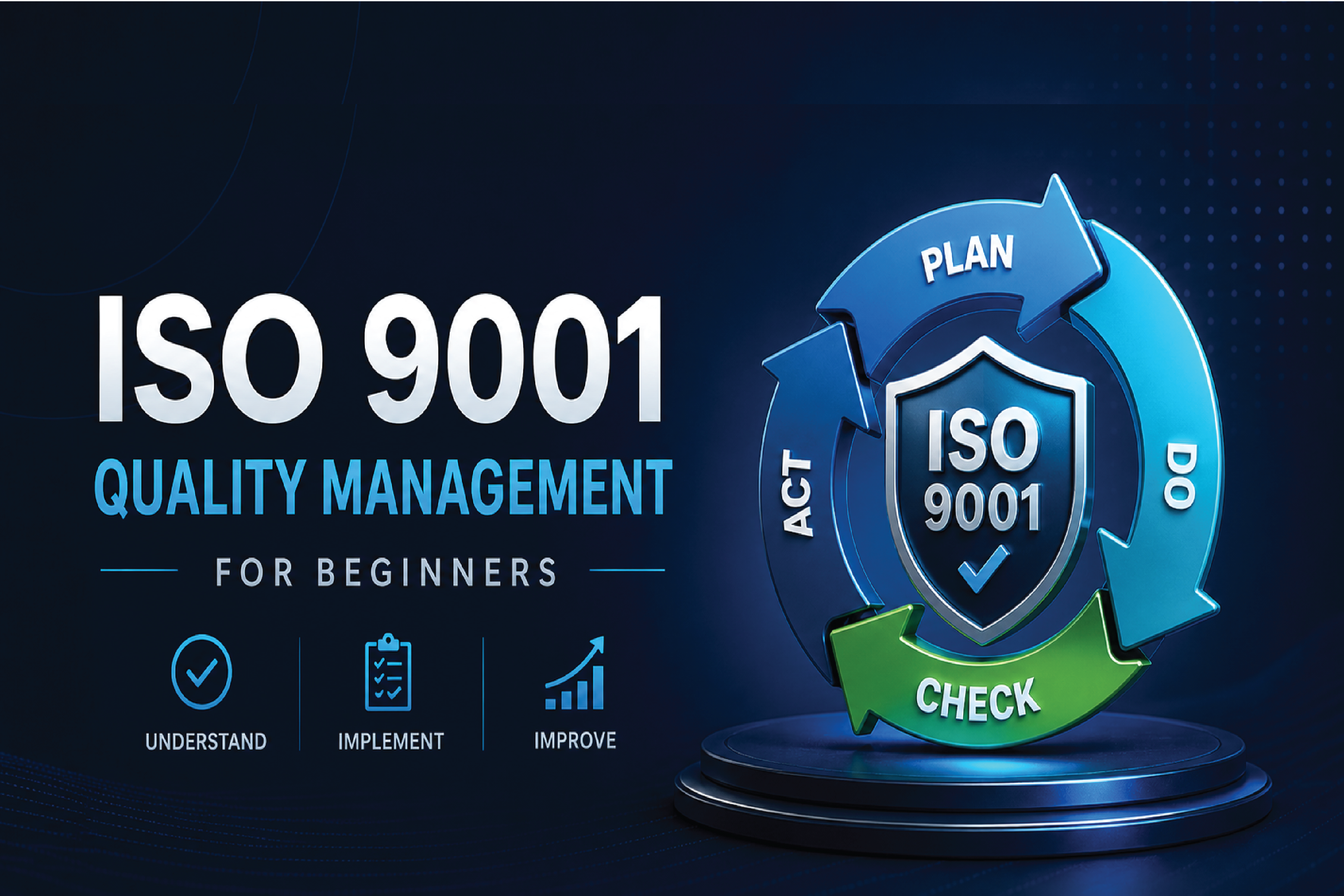
Continual improvement, a core ISO 9001 principle, involves regularly enhancing processes, products, and services using structured methods like the PDCA cycle. It drives sustained quality, efficiency, and customer satisfaction.
Evidence-based decision-making in ISO 9001 means using reliable data and factual analysis to guide organizational decisions, improving accuracy, efficiency, and alignment with objectives. This principle fosters a culture of transparency and continual improvement.
Relationship management under ISO 9001 involves building strategic partnerships with suppliers and stakeholders to enhance quality, reduce risks, and foster continuous improvement. Strong relationships lead to sustainable success and competitive advantage.
Annex SL's High-Level Structure is a foundational framework that promotes consistency and integration across ISO management standards, helping organizations achieve cohesive, efficient, and manageable management systems.
ISO 9001 is structured into 10 clauses covering context, leadership, planning, support, operation, evaluation, and improvement to guide organizations in effective Quality Management System implementation. This framework supports continuous improvement aligned with business objectives.
QMS documentation includes the quality policy, manual, procedures, and records, each essential for establishing, operating, and demonstrating an effective quality management system. They ensure consistency, traceability, and compliance with ISO 9001 requirements.
Determining organizational context and interested parties involves analyzing internal and external factors impacting your purpose, strategy, and quality goals. It is fundamental for aligning your QMS with your environment and stakeholder needs, ensuring continuous improvement and compliance.
Defining the QMS scope, processes, and objectives sets clear boundaries, ensures process control, and establishes measurable goals aligned with business strategy. This clarity enables effective quality management and continuous improvement.
Risk-based thinking in ISO 9001 promotes proactive identification and management of risks and opportunities, while the PDCA cycle provides a systematic framework for continual improvement. Together, they drive better quality performance and organizational resilience.
ISO 9001 documentation requirements focus on documented information essential to defining the QMS scope, quality policy, objectives, supplier management, and records evidencing compliance and performance. Documentation ensures consistent operations, effective communication, and supports continual improvement and certification processes.
Communication, training, and awareness are vital for ensuring employees understand their roles and quality goals, enabling consistent quality management and ongoing improvement. Proper planning of these support functions fosters engagement, compliance, and customer satisfaction.
Process management and control in ISO 9001 involve systematic planning, regulating, and monitoring of processes to ensure consistent quality and continuous improvement. Managing processes cohesively enhances operational efficiency, customer satisfaction, and risk mitigation.
Managing nonconformities and corrective actions under ISO 9001 involves detecting deviations, documenting issues, analyzing root causes, implementing corrective measures, and verifying their effectiveness. This process ensures quality standards are maintained and improvements are sustained.
Monitoring, measuring, and analyzing performance are vital ISO 9001 activities that provide data-driven insight into processes and products, ensuring quality objectives are met and supporting continual improvement.
Internal audits objectively evaluate the QMS for compliance and effectiveness, identify improvement opportunities, and prepare organizations for certification audits. These audits promote continual improvement and risk mitigation.
Management review is a systematic evaluation conducted by top management to assess the QMS’s performance, relevance, and improvement opportunities. It ensures continuous alignment with organizational goals and fosters a culture of ongoing quality enhancement.
Continual improvement in ISO 9001 uses structured tools (like PDCA, CAPA, and management review) to find and implement better ways of working, driving ongoing performance, quality, and customer satisfaction. This process is ongoing, strategic, and integral to the QMS.
Corrective actions address and eliminate causes of existing nonconformities, while preventive actions proactively prevent potential issues. Both are integral to ISO 9001’s continual improvement, driving quality, compliance, and operational excellence.
External certification involves an independent, accredited body assessing your QMS through audits and granting an ISO 9001 certificate, with ongoing surveillance to ensure compliance. This formal recognition builds credibility and opens new business opportunities.
ISO 9001 certification provides organizations with verified quality management practices that boost customer trust, operational efficiency, and competitive edge. It fosters compliance, continual improvement, and workforce engagement, supporting sustainable growth.