The monitoring, measurement, analysis, and review of an Information Security Management System (ISMS) are critical requirements in ISO/IEC 27001, designed to ensure that the system remains effective and aligned with organizational objectives.
These activities help organizations collect data on how well their information security processes and controls are functioning, analyze trends and patterns, and evaluate overall performance.
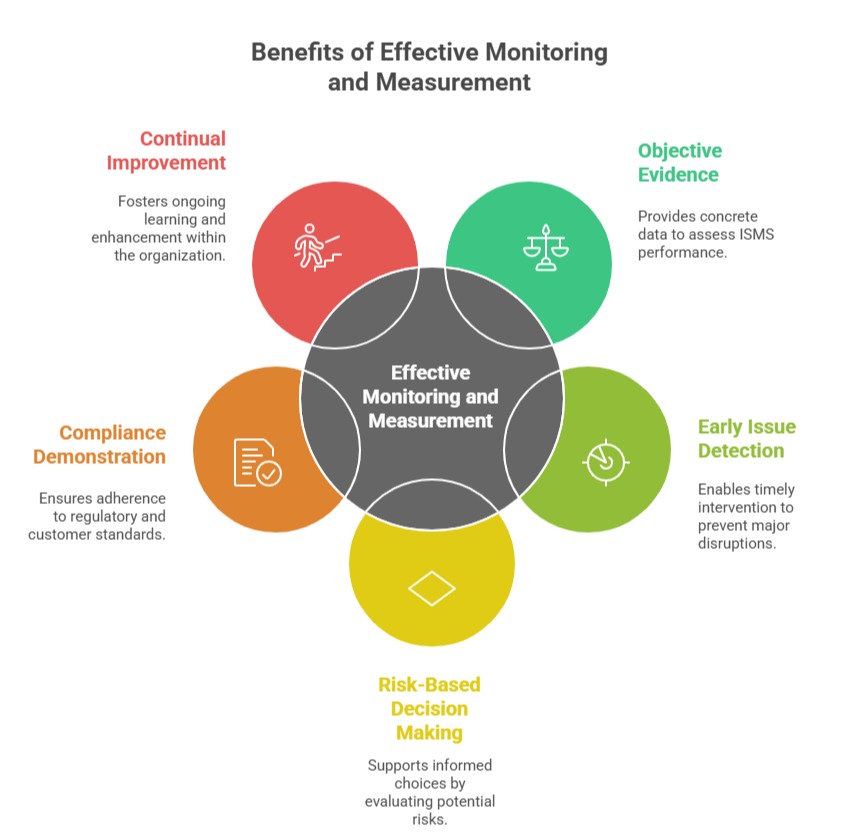
Monitoring and measurement provide the factual basis needed for management decisions, continual improvement, and demonstrating compliance during audits.
Aspects of Monitoring and Measurement (Clause 9.1)
 - visual selection-Picsart-CropImage (1).png)
To ensure the ISMS remains effective, organizations must regularly monitor and measure essential processes and controls. Below are the primary aspects covered under Clause 9.1.
1. What to Monitor and Measure: Organizations must determine which aspects of their ISMS need to be monitored and measured. This typically includes information security processes, controls, risk treatment effectiveness, incident response times, and compliance with policies.
2. Methods and Timing: Clear methods for data collection, analysis, and evaluation should be established. The frequency of monitoring and measurement depends on the risk levels and criticality of processes, but should be regular enough to provide timely insights.
3. Roles and Responsibilities: Assigning who will perform monitoring, analysis, and evaluation activities is essential for accountability. This involves roles in security teams, ISMS managers, and auditors.
4. Documentation: Documented information on monitoring and measurement results must be maintained as evidence of ISMS performance and to support management review and audits.
Analysis and Evaluation
After collecting data, organizations need to analyze and interpret the information to spot trends, detect anomalies, and assess whether controls effectively mitigate risks.
Evaluation involves comparing performance against objectives and compliance requirements, determining if improvements or corrective actions are needed.
Review and Continual Improvement
Performance evaluation results feed into management reviews (Clause 9.3), where top management assesses ISMS effectiveness, resource needs, and strategic alignment.
These reviews guide decisions on improvements and corrective measures, supporting ongoing enhancement of security posture and business resilience.

Class Sessions
Sales Campaign

We have a sales campaign on our promoted courses and products. You can purchase 1 products at a discounted price up to 15% discount.