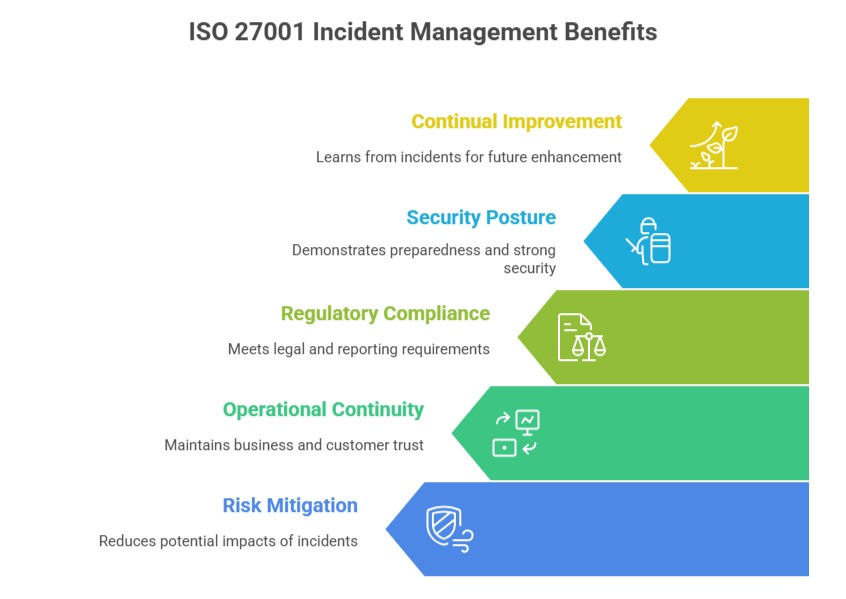
Incident management is a crucial component of ISO/IEC 27001, designed to ensure organizations can promptly detect, respond to, and recover from information security incidents.
An incident might include unauthorized access, data breaches, malware attacks, or system failures that threaten organizational assets or operations.
Efficient incident management minimizes damage, protects sensitive data, maintains business continuity, and complies with regulatory requirements.
It establishes a structured approach to consistently handle incidents and learn from them to prevent recurrence.
Key Elements of Incident Management
An effective incident management process ensures timely detection, response, and recovery from security incidents. Here are the core elements that form the foundation of a robust incident management system.
1. Incident Management Strategy and Policy: Organizations must create a formal incident management policy outlining objectives, scope, roles, and responsibilities. This policy aligns with ISO 27001 requirements and reflects the organization’s commitment to effective incident handling.
2. Incident Management Procedures: Detailed procedures define how incidents will be identified, recorded, assessed, analyzed, contained, eradicated, and recovered from. These procedures specify communication routes, escalation points, and responsibilities to ensure clarity and prompt action.
3. Identification and Recording: Rapid detection using monitoring tools, alerts, and reporting channels is crucial. Each incident is documented with key details like date, time, nature, impact, and preliminary assessment to enable effective tracking and response.
4. Response and Containment: Immediate actions aim to limit damage by isolating affected systems or networks. Clear roles ensure teams coordinate containment efforts and prevent further harm.
5. Reporting and Communication: Comprehensive incident reports record facts, actions taken, impact assessments, and follow-up steps. External reporting to regulators (e.g., GDPR breach notifications) and internal communication keep stakeholders informed.
6. Root Cause Analysis and Lessons Learned: In-depth investigations uncover causes and weaknesses that led to incidents. Findings guide improvements to policies, controls, and awareness programs, reducing future risks.
7. Training and Awareness: Incident response teams and staff receive continuous training and simulations to prepare for efficient incident handling.