Understanding the organizational context and stakeholders is a fundamental step in implementing an effective Information Security Management System (ISMS) as specified in ISO/IEC 27001.
The organizational context refers to both external and internal factors that influence the organization's ability to achieve its information security objectives.
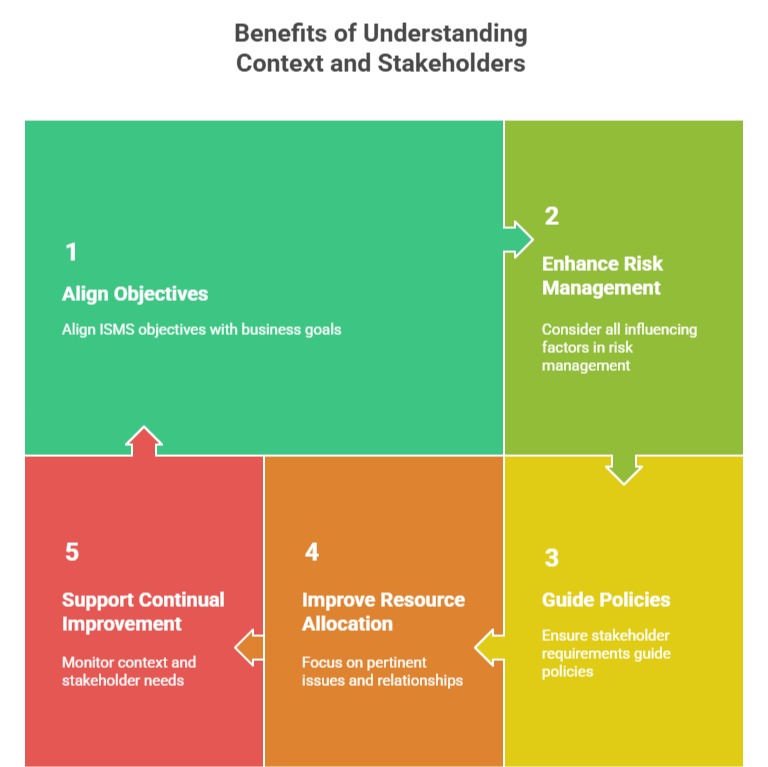
Recognizing these factors helps organizations align their ISMS with business goals, identify risks and opportunities, and ensure that security controls are appropriate and effective.
Equally important is identifying relevant stakeholders—individuals or groups who can affect or are affected by the ISMS—to consider their needs and expectations in the security management process.
Organizational Context: Internal and External Factors
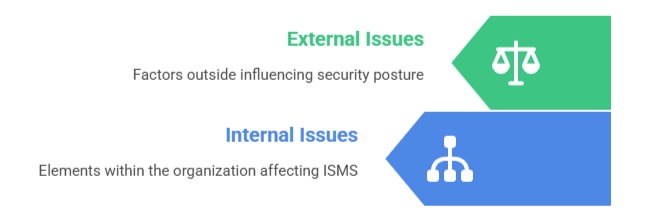
ISO 27001 requires organizations to determine and continuously monitor the factors that impact their ISMS. These factors include:
1. Internal Issues: These are elements within the organization that affect ISMS implementation, such as organizational structure, culture, available resources (financial, technological, human), policies and procedures, existing technologies, and staff competencies.
2. External Issues: These factors lie outside the organization but influence its operations and security posture, including market trends, customer expectations, legal and regulatory environment, political and economic conditions, social and cultural factors, technological advances, and competitive landscape.
Identifying these issues enables the organization to tailor its ISMS to its specific operating environment, concentrating resources on areas of greatest impact or vulnerability.
Stakeholders and Their Importance
Stakeholders, or interested parties, include individuals, groups, or entities that have a stake in the organization’s information security. Examples include:
1. Customers and clients who expect their data to be protected
2. Regulators and legal authorities enforcing compliance
3. Suppliers and partners who share or access information assets
4. Employees who manage and use information systems
5. Shareholders are concerned with organizational reputation and risk
6. Community and societal groups impacted by data practices
The organization must identify these stakeholders, understand their relevant requirements or expectations, and consider these in the design and operation of the ISMS. This helps ensure that risks are addressed comprehensively and expectations are met, thereby strengthening trust and compliance.
Approaches to Assessing Context
Organizations may use various methods, such as SWOT (Strengths, Weaknesses, Opportunities, Threats) analysis, PESTLE (Political, Economic, Social, Technological, Legal, Environmental) analysis, or management workshops to gather comprehensive insights on contextual factors and stakeholders.
While ISO 27001 does not mandate formal documentation of context, capturing a summary helps demonstrate due diligence during audits and internal reviews.

Class Sessions
Sales Campaign

We have a sales campaign on our promoted courses and products. You can purchase 1 products at a discounted price up to 15% discount.