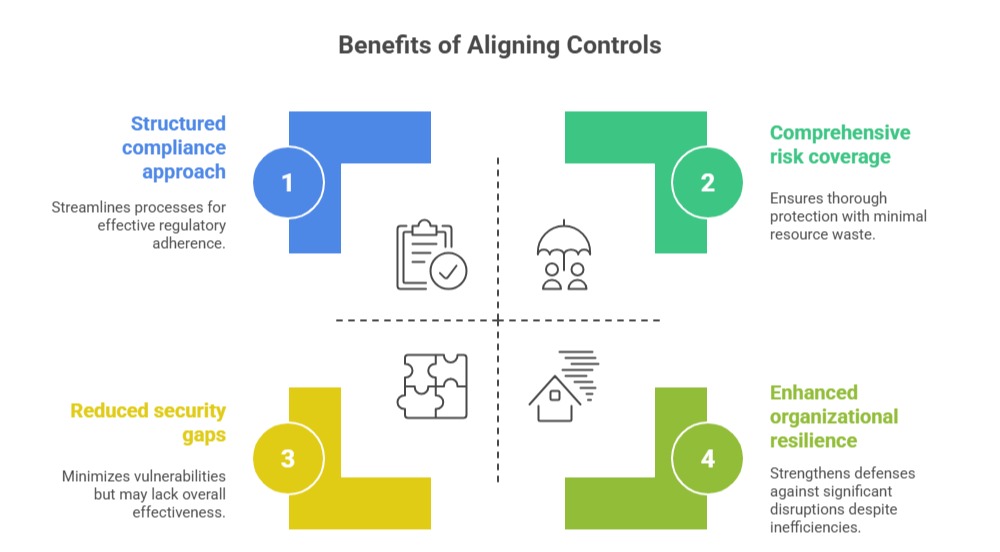
Aligning controls from ISO/IEC 27001 Annex A is essential for achieving a comprehensive and effective Information Security Management System (ISMS). Annex A comprises 93 security controls, categorized into four key themes: organizational, people, physical, and technological controls.
Properly addressing these themes ensures that information security measures cover policies, human factors, physical safeguards, and technology, protecting information assets holistically.
Understanding and implementing these controls in alignment with organizational risks and objectives allows organizations to demonstrate compliance, manage threats, and maintain robust security.
Organizational Controls
These controls focus on the high-level framework of information security governance, covering policies, roles, responsibilities, and processes necessary for ISMS operation. Key areas include:
1. Establishing and maintaining the information security policy
2. Assigning security responsibilities and authorities
3. Coordination with external parties and authorities
4. Managing risk, threat intelligence, and monitoring
5. Information classification and asset management
6. Identity and access management
7. Incident management and business continuity planning
Organizational controls ensure that security efforts are structured, communicated, and maintained consistently across the organization.
People Controls
Employees and other personnel are critical elements in information security. These controls address risks related to human involvement, including:
1. Pre-employment screening and background checks
2. Security awareness, education, and training programs
3. Clear communication of security roles and responsibilities
4. Managing contractual obligations and confidentiality agreements
5. Policies for remote work and handling of security events
By focusing on people controls, organizations reduce risks stemming from human error, insider threats, or lack of awareness.
Physical Controls
Physical safeguards protect the environment in which information is stored and processed. Key physical controls involve:
1. Defining security perimeters and secure areas
2. Implementing access controls, locks, and surveillance
3. Maintaining clear desk and screen policies
4. Managing equipment and supporting utilities' security
5. Securing cabling, media, and equipment disposal
Physical controls ensure that unauthorized physical access, damage, or interference is minimized.
Technological Controls
Technology-based controls are often the most visible and include:
1. Malware protection and detection
2. Data backup and recovery measures
3. Continuous logging, monitoring, and auditing systems
4. Network security, segmentation, and firewalls
5. Secure software development and change management
6. Encryption and cryptographic techniques
Technological controls protect assets from cyber threats and maintain information system integrity and availability.