Adopting cloud computing brings transformative benefits but also introduces a range of business risks and challenges.
Organizations must anticipate and effectively manage these risks to ensure successful cloud deployment, secure data, and maintain business continuity.
Understanding common challenges and suitable mitigation strategies enables businesses to navigate the cloud adoption journey confidently while maximizing value and minimizing disruptions.
Common Business Risks in Cloud Adoption
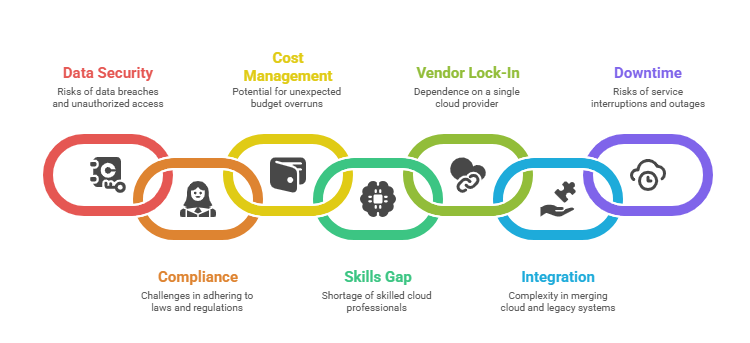
The following points outline the major business risks associated with cloud adoption.
1. Data Security and Privacy Risks: Cloud environments present risks of data breaches, unauthorized access, and data loss. Sensitive information hosted in the cloud requires rigorous protection measures.
2. Compliance and Regulatory Challenges: Ensuring cloud usage complies with regional and industry-specific laws, such as GDPR or HIPAA, can be complex, especially when data crosses borders.
3. Cost Overruns: Without strict governance, cloud spending can escalate unexpectedly due to resource sprawl, over-provisioning, or lack of cost visibility.
4. Lack of Cloud Skills: Shortage of staff skilled in cloud architecture, security, and management may hinder effective cloud adoption and increase operational risks.
5. Vendor Lock-In: Dependence on a single cloud provider’s ecosystem may limit flexibility and increase migration costs in the future.
6. Integration Complexity: Migrating legacy applications and integrating cloud services with on-premises systems can be technically challenging and resource-intensive.
7. Operational Downtime: Misconfigurations, outages, or poor disaster recovery planning in cloud setups can lead to downtime affecting business continuity.
Mitigation Strategies for Cloud Adoption Risks
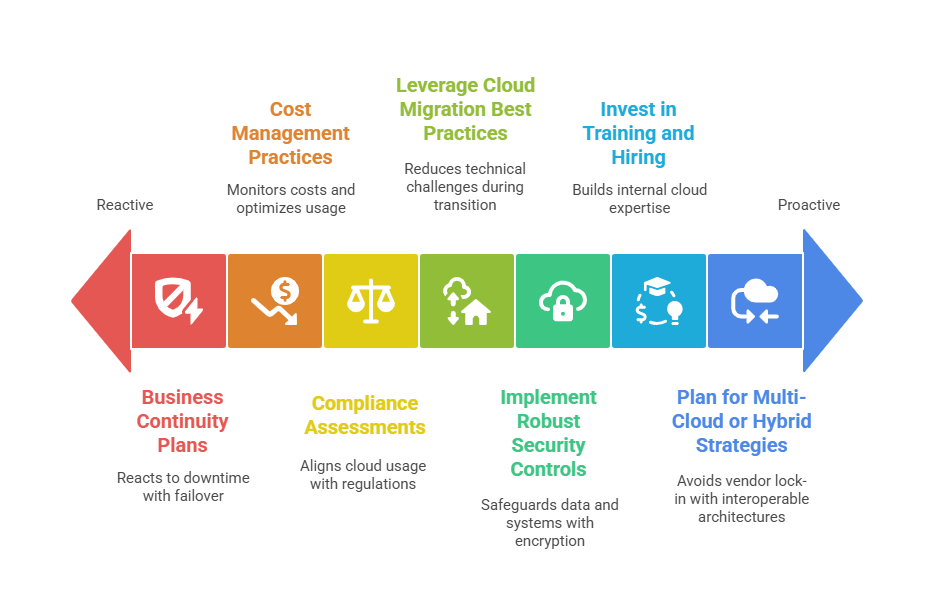 Cloud adoption risks can be effectively minimized through structured planning, robust security measures, and operational maturity. Below are essential strategies to ensure safe and sustainable cloud integration.
1. Implement Robust Security Controls: Use encryption, identity and access management, multi-factor authentication, and continuous monitoring to safeguard data and systems.
2. Conduct Compliance Assessments: Leverage cloud providers’ compliance certifications and implement governance frameworks that align cloud usage with regulatory requirements.
3. Adopt Cost Management Practices: Employ cloud cost monitoring tools, budget controls, and usage optimization to prevent overruns and improve financial planning.
4. Invest in Training and Hiring: Build internal cloud expertise through training programs and, where necessary, augment with external specialists to manage cloud environments effectively.
5. Plan for Multi-Cloud or Hybrid Strategies: Avoid vendor lock-in by designing interoperable architectures and considering multi-cloud or hybrid cloud deployments.
6. Leverage Cloud Migration Best Practices: Use phased migration, comprehensive testing, and integration planning to reduce technical challenges and ensure smooth transitions.
7. Develop Business Continuity Plans: Establish backup, disaster recovery, and failover strategies using cloud-native tools to minimize operational downtime.