Compliance programs play a crucial role in establishing and maintaining business trust by ensuring that organizations adhere to established laws, regulations, and standards governing data security, privacy, and governance.
In the context of cloud computing, compliance certifications demonstrate that cloud providers and their customers meet stringent requirements designed to protect sensitive information and maintain operational integrity.
Achieving and maintaining compliance helps businesses minimize risks, avoid legal penalties, and build credibility with customers, partners, and regulators.
Understanding Compliance Certifications
Compliance certifications are formal attestations that a company’s processes, technology, and controls meet defined security and regulatory standards.
These certifications are often issued by respected third-party auditors following rigorous assessments. Common compliance programs relevant in cloud environments include:
1. General Data Protection Regulation (GDPR): Focuses on protecting the personal data of EU residents and mandates strict privacy controls and breach notifications.
2. Health Insurance Portability and Accountability Act (HIPAA): Sets standards for protecting sensitive patient health information in the United States.
3. Payment Card Industry Data Security Standard (PCI DSS): Regulates secure handling of credit card information to prevent fraud.
4. ISO/IEC 27001: An internationally recognized standard for information security management systems (ISMS), establishing best practices for data security.
5. National Institute of Standards and Technology (NIST) Cybersecurity Framework: Provides guidelines for managing cybersecurity risk, widely adopted in various industries.
6. SOC 1, SOC 2, SOC 3: Service Organization Controls reports that assess internal controls over financial reporting and data security, availability, processing integrity, confidentiality, and privacy.
Importance of Business Trust
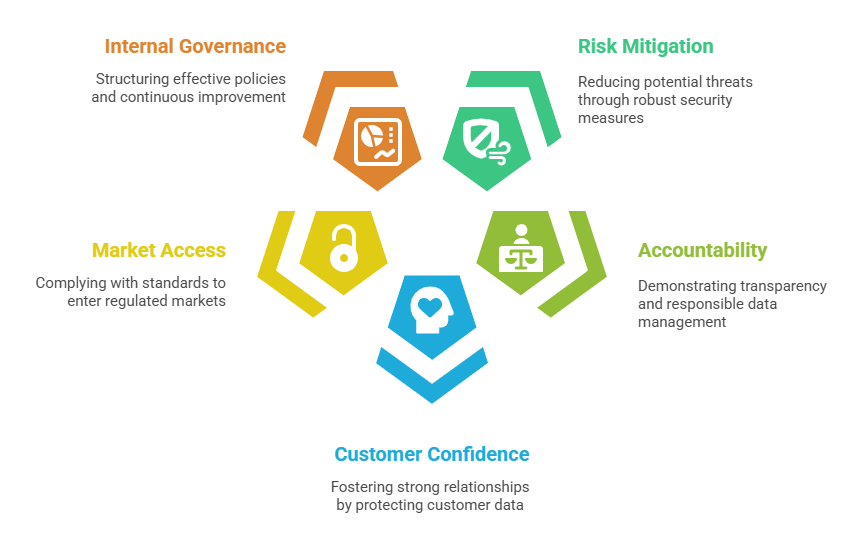
Compliance certifications serve as trusted signals to customers, investors, and regulators that an organization takes security seriously and follows best practices. They help:
1. Mitigate Risks: Reduce the likelihood of data breaches, legal penalties, and operational disruptions by enforcing robust controls.
2. Demonstrate Accountability: Show commitment to transparency and responsible management of sensitive data.
3. Enhance Customer Confidence: Customers prefer partners who protect their data and comply with industry regulations, fostering stronger relationships.
4. Facilitate Market Access: Compliance with regional or industry-specific standards is often mandatory for doing business, especially in regulated sectors like healthcare and finance.
5. Support Internal Governance: Certified frameworks guide companies in structuring effective policies, controls, and continuous improvement initiatives.