Successfully adopting cloud technology requires more than just deploying applications and services. It demands comprehensive organizational readiness, strong governance mechanisms, and effective change management practices.
The Cloud Adoption Framework (CAF) provides structured guidance to help organizations prepare, govern, and transform themselves to fully realize the benefits of cloud computing while minimizing risks and disruptions.
Organizational Readiness: Preparing for Cloud
Organizational readiness assesses whether a company’s people, processes, and technology are prepared to embrace cloud adoption. This involves evaluating skills, culture, and infrastructure readiness. Key components include:
1. Skills Assessment: Identifying existing knowledge gaps related to cloud technologies, security, and operations, and planning targeted training for employees.
2. Cultural Readiness: Encouraging a cloud-first mindset that promotes agility, collaboration, and innovation. Leadership buy-in and clear communication are critical to driving adoption.
3. Process Alignment: Reviewing existing IT and business processes to ensure compatibility with cloud operating models and workflows.
4. Infrastructure Assessment: Understanding legacy systems, dependencies, and integration points to plan migration or modernization properly.
Governance: Ensuring Cloud Success and Risk Management
Governance is the framework of policies, roles, responsibilities, and controls established to manage cloud adoption securely and efficiently. Effective governance includes:
| Governance Component | Description |
| Policy Management | Establishes clear standards and procedures for security, compliance, resource provisioning, and budget control to guide cloud operations effectively. |
| Risk Management | Involves continuous identification, assessment, and mitigation of cloud-specific risks, including data privacy, compliance, and operational vulnerabilities. |
| Cost Control | Uses tagging, budgeting, and monitoring tools to track and optimize cloud expenditures, ensuring financial accountability and efficiency. |
| Performance Monitoring | Employs analytics and monitoring tools to assess resource utilization, application performance, and incident response effectiveness. |
Change Management: Driving Adoption and Minimizing Disruption
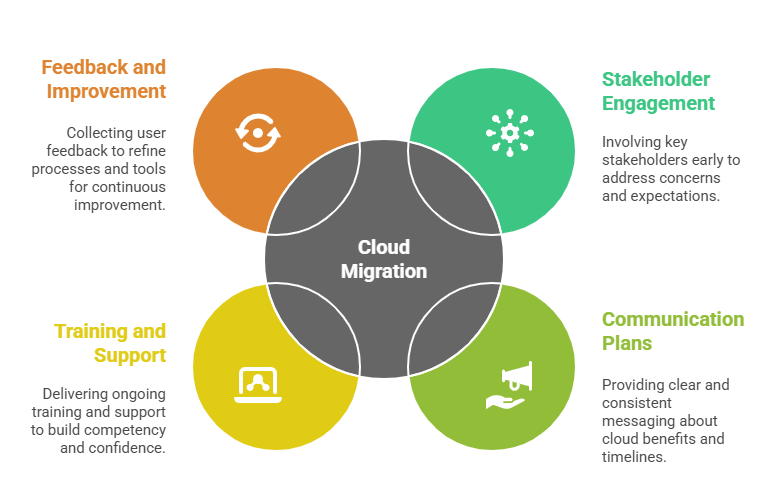
Adopting the cloud alters how teams work and how IT services are delivered. Effective change management mitigates resistance and ensures smooth transitions through:

Class Sessions
Sales Campaign

We have a sales campaign on our promoted courses and products. You can purchase 1 products at a discounted price up to 15% discount.