Assessing and closing gaps between ISO/IEC 27001:2013 and the 2022 revision is a fundamental step for organizations transitioning their Information Security Management System (ISMS) to remain compliant and fortify their security posture.
This process involves identifying differences in controls, requirements, and processes, evaluating current ISMS adequacy, and implementing necessary enhancements to satisfy the updated standard.
Systematic gap analysis and remediation ensure organizations address all new or changed elements effectively while preserving existing strengths.
Assessing Gaps Between 2013 and 2022 Requirements
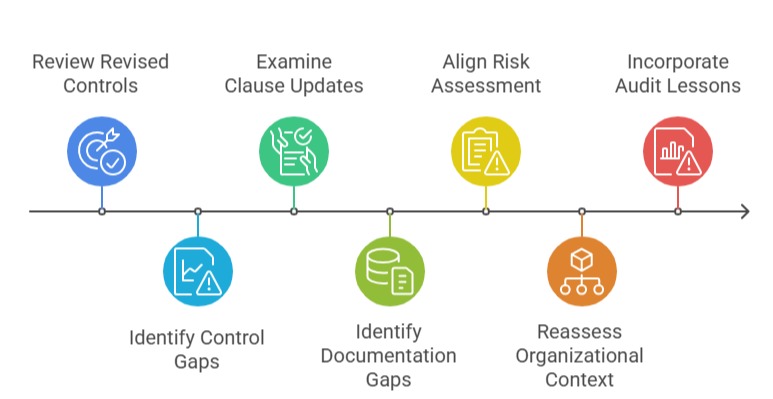
Transitioning to the 2022 standard begins with careful analysis of differences and overlaps between the previous and revised requirements. Below are the main areas to focus on during a gap assessment.
1. Comprehensive Review of Revised Controls: Compare the Annex A control sets, noting merged, new, renamed, and removed controls. Identify where existing controls need to be expanded, combined, or replaced to align with the 2022 structure.
2. Clause and Documentation Differences: Examine updates in main clauses like planning for changes (Clause 6.3) and enhanced leadership responsibilities. Identify documentation or procedural gaps, such as change management records or an updated Statement of Applicability.
3. Risk Assessment Alignment: Review the risk assessment methodology to ensure it supports the enhanced risk-based approach emphasized in the new standard, reflecting updated control attributes and organizational context.
4. Organizational Context and Stakeholder Analysis: Reassess the organizational context and interested parties to confirm that evolving needs and expectations are captured regarding information security.
5. Audit Findings and Previous Nonconformities: Incorporate lessons learned from past audits, remediation plans, and continuous improvement activities to address any outstanding weaknesses.
Closing Gaps to Meet 2022 Requirements
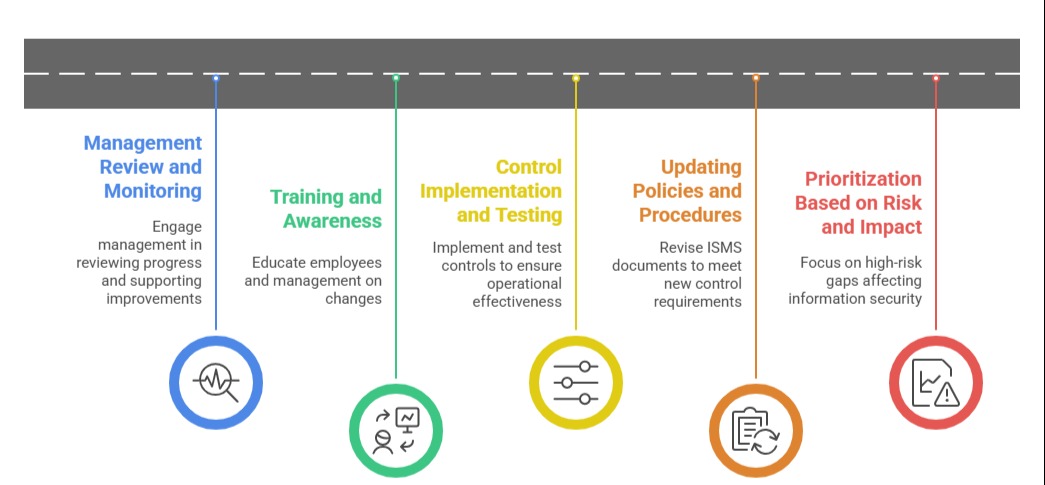
A structured approach ensures all gaps identified during transition are resolved efficiently and effectively. Here are the primary actions organizations should take to close gaps and meet the 2022 updates.
1. Prioritization Based on Risk and Impact: Focus remediation efforts on high-risk gaps impacting confidentiality, integrity, and availability of information or key business processes.
2. Updating Policies and Procedures: Revise or develop relevant ISMS documents addressing new control requirements, leadership roles, communication, and planning processes.
3. Control Implementation and Testing: Implement missing controls, enhance existing ones, and verify through internal audits or testing to ensure operational effectiveness.
4. Training and Awareness: Educate employees and management on changes, ensuring understanding and compliance through tailored training programs.
5. Management Review and Monitoring: Engage top management in reviewing transition progress, supporting resource allocation, and embedding continual improvement of the ISMS in line with the updated standard.

Class Sessions
Sales Campaign

We have a sales campaign on our promoted courses and products. You can purchase 1 products at a discounted price up to 15% discount.