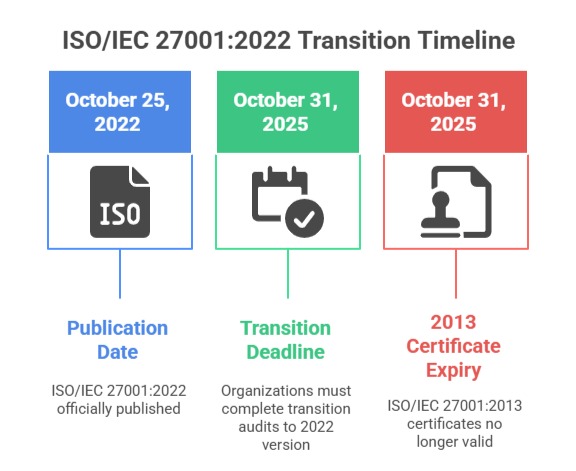
Determining transition timelines for compliance with ISO/IEC 27001:2022 is a critical step for organizations aiming to maintain or achieve certification under the updated standard.
Timely and strategic planning ensures smooth migration from ISO/IEC 27001:2013, minimizes compliance risks, and avoids lapses in certification validity.
The International Accreditation Forum (IAF) establishes global deadlines, and certification bodies set specific requirements that organizations must meet to demonstrate ongoing adherence to the latest standard.
Certification Body Requirements
The transition to ISO/IEC 27001:2022 involves specific planning and communication requirements set by certification bodies. The following points outline key expectations organizations need to address.
1. Audit Transition: Certification bodies require transition audits to be planned within regular surveillance or recertification schedules before the deadline. These audits verify updated ISMS controls, documentation, and risk management align with the 2022 version.
2. Early Adoption Encouraged: Many certification bodies encourage organizations to initiate transition efforts well before 2025, allowing time for remediation of identified gaps and staff training on the new standard.
3. Documentation Updates: Organizations must update their Statement of Applicability (SoA), policies, procedures, and risk assessments to meet 2022 requirements prior to the transition audit.
4. Communication and Reporting: Certification bodies may require formal communication regarding transition plans and progress, including submission of revised SoA or transition checklists.
Best Practices for Transition Planning
| Best Practice Area | Description |
| Gap Analysis | Conduct early gap assessments comparing the current Information Security Management System (ISMS) against the 2022 standard to identify necessary changes. |
| Project Planning | Develop detailed transition project plans with defined milestones for document updates, control implementation, staff training, internal audits, and certification audits. |
| Stakeholder Engagement | Involve leadership and key stakeholders early to ensure resource allocation and alignment of strategic objectives with transition efforts. |

Class Sessions
Sales Campaign

We have a sales campaign on our promoted courses and products. You can purchase 1 products at a discounted price up to 15% discount.