An incident management policy and its accompanying procedures form the backbone of an organization’s ability to respond effectively to information security incidents.
These documents provide a formalized framework that defines the scope, objectives, roles, responsibilities, and processes necessary to detect, assess, respond to, and learn from incidents.
Well-developed policies and procedures ensure consistency, compliance, and preparedness, enabling organizations to minimize the impact of incidents on operations and protect critical assets.
They also align with standards such as ISO/IEC 27035, which emphasizes structured and repeatable incident management practices.
Key Components of an Incident Management Policy
A well-defined Incident Management Policy ensures everyone in the organization understands their role before, during, and after an incident. Below are the essential components that make such a policy complete and effective.
1. Purpose and Scope: Clearly articulates why the policy exists and what types of incidents it covers. It defines the organizational units, systems, services, and personnel to which the policy applies, ensuring clarity on applicability.
2. Definitions: Includes relevant terminology such as “incident,” “event,” “major incident,” and “stakeholders” to establish a common understanding across the organization.
3. Roles and Responsibilities: Specifies the responsibilities of the incident management team, IT staff, communications, legal counsel, senior management, and other stakeholders. Clear role definitions ensure accountability and streamline coordination during incidents.
4. Incident Classification and Prioritization: Outlines criteria to categorize incidents by severity, impact, and urgency. This helps prioritize response actions and allocate appropriate resources effectively.
5. Incident Response Procedures: Provides detailed step-by-step guidance covering incident detection, reporting, assessment, containment, eradication, recovery, and closure. Procedures should also include escalation paths and communication protocols.
6. Communication and Reporting: Establishes protocols for internal and external communications, including notification requirements, stakeholder updates, and legal or regulatory reporting.
7. Training and Awareness: Specifies requirements for training staff on their roles, incident recognition, and reporting mechanisms to foster a culture of security awareness and readiness.
8. Monitoring and Review: Defines how incidents and incident management effectiveness are tracked, documented, and reviewed. Regular policy reviews and post-incident analyses are essential for continuous improvement.
Developing Effective Incident Management Procedures
Clear and well-defined procedures are essential for ensuring an organized and effective response to security incidents. Below are the key aspects organizations should consider when developing incident management procedures.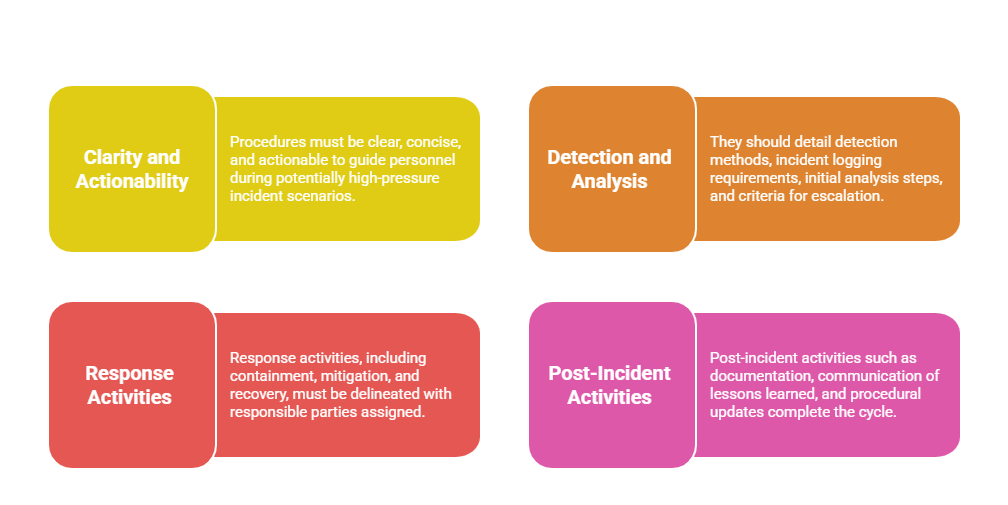

Class Sessions
Sales Campaign

We have a sales campaign on our promoted courses and products. You can purchase 1 products at a discounted price up to 15% discount.