Coordination and communication are vital pillars in the effective management of information security incidents.
Seamless interaction among teams, leadership, stakeholders, and external parties during an incident ensures swift response, reduces confusion, and protects the organization's reputation.
ISO/IEC 27035 emphasizes clear communication channels and structured coordination to align efforts, facilitate decision-making, and maintain transparency throughout the incident lifecycle.
Importance of Coordination and Communication
The success of an organization’s response efforts depends on seamless collaboration and information flow. The following points highlight the importance of maintaining effective coordination and communication.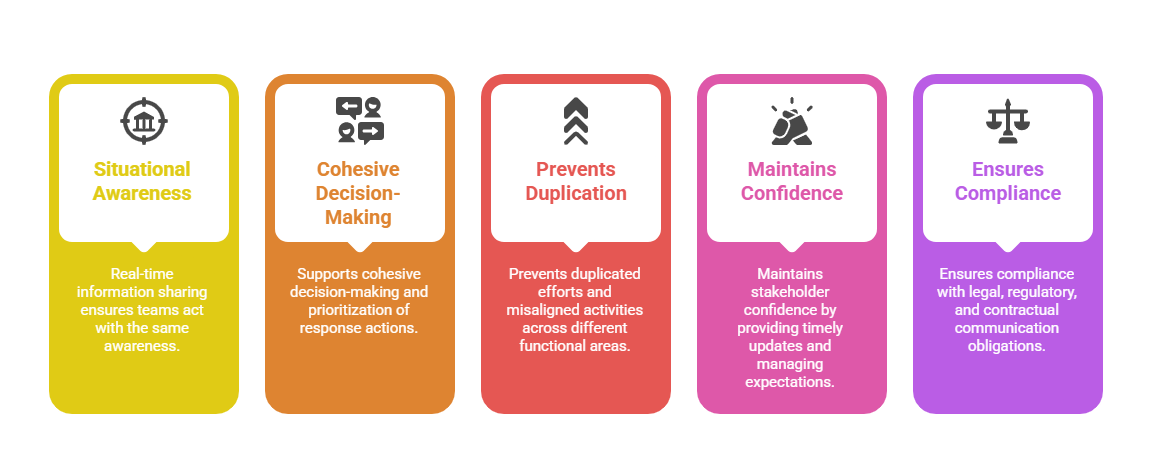
Key Elements of Effective Coordination and Communication
Here are the fundamental components of a well-structured communication process that support timely updates, transparency, and cross-functional coordination during incident management.
1. Centralized Communication Platform: Organizations should use a single, reliable platform where all incident-related communication and data are consolidated. This facilitates instant updates, reduces miscommunication, and supports collaboration among different teams such as security analysts, IT staff, legal, and management.
2. Clear Roles and Responsibilities: Defining who communicates what, to whom, and when prevents conflicting messages. Designating communication leads or spokespeople ensures consistent and accurate information flow both internally and externally.
3. Incident Communication Plan: A well-documented communication plan identifies stakeholders (internal and external), communication channels (email, chat tools, status pages, social media), message templates, and escalation procedures. Preparing these elements ahead of incidents enables quick, structured communication during crises.
4. Timely and Transparent Updates: Providing regular, honest updates builds trust and keeps all parties informed about incident status, impact, and remediation progress. Transparency helps mitigate reputational damage and reduces rumors or misinformation.
5. Handling Sensitive Information: Careful management of sensitive or confidential information is essential. Communications should balance transparency with the need to protect privacy, legal interests, and ongoing investigations.
6. Post-Incident Communication: After resolution, communicating the outcomes, lessons learned, and improvements reassures stakeholders and demonstrates commitment to security and accountability.

Class Sessions
Sales Campaign

We have a sales campaign on our promoted courses and products. You can purchase 1 products at a discounted price up to 15% discount.