Effective incident management relies heavily on clearly defined roles and responsibilities within an organization.
Well-structured assignments ensure that incidents are detected, reported, assessed, and resolved promptly and efficiently by qualified personnel.
ISO/IEC 27035 stresses the importance of establishing an incident management team with specific roles to guarantee a coordinated and successful response to information security incidents, minimizing damage and supporting business continuity.
Key Roles and Their Responsibilities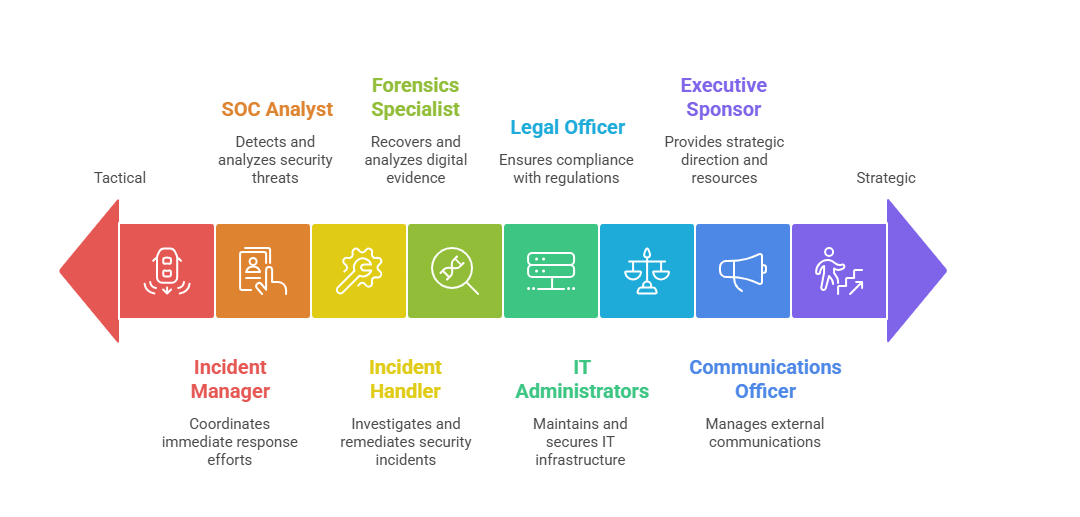
The list below defines the major roles and their specific responsibilities across the incident response process.
1. Incident Manager (or Incident Commander)
Leads the overall incident management process. This role involves coordinating efforts among different teams, making critical decisions, managing resources, and communicating with senior management and external stakeholders.
The Incident Manager ensures compliance with organizational policies and oversees the entire incident lifecycle from detection to resolution and review.
2. Security Operations Center (SOC) Analyst
Monitors security systems to detect anomalies and potential threats. SOC Analysts investigate alerts, escalate verified incidents, and assist in forensic analysis. Their expertise helps identify attack vectors and assist in containment strategies.
3. Incident Handler
Executes tactical incident response actions such as containment, eradication, and system recovery. Incident Handlers work closely with IT and security teams to mitigate threats and restore affected systems and data.
4. Forensics and Threat Intelligence Specialist
Conducts forensic investigations to understand the root causes of incidents. They gather evidence, identify Indicators of Compromise (IoCs), and analyze attacker behaviors. Their insights improve incident prevention and response capabilities.
5. IT/Network Administrators
Support incident containment by isolating compromised systems, applying patches, and restoring system integrity. They ensure technical infrastructure is resilient and operational throughout and after incidents.
6. Legal and Compliance Officers
Ensure that incident management activities comply with regulatory requirements and legal obligations. They advise on breach notification laws, privacy implications, and documentation standards.
7. Communications Officer
Manages internal and external communications to maintain transparency and protect the organization’s reputation. They coordinate messages with legal and leadership teams, especially during public disclosures.
8. Executive Sponsor / Chief Information Security Officer (CISO)
Provides strategic direction, oversight, and necessary resources for incident management. The Executive Sponsor advocates for incident management at the leadership level and drives continuous improvement initiatives.

Class Sessions
Sales Campaign

We have a sales campaign on our promoted courses and products. You can purchase 1 products at a discounted price up to 15% discount.