Continual improvement is a foundational concept of ISO 9001, requiring organizations to systematically seek ways to enhance the suitability, adequacy, and effectiveness of their Quality Management System (QMS) and overall performance.
It is not just a one-time change but an ongoing activity embedded in operational routines, strategic planning, and the organization’s culture. The aim is to increase customer satisfaction, streamline processes, reduce costs, and adapt to changing needs.
Methods of Continual Improvement
ISO 9001 emphasizes several methods for achieving continual improvement:
1. Plan-Do-Check-Act (PDCA) Cycle: The PDCA cycle is a structured, iterative approach for solving problems and making process improvements.
Plan: Identify an area for improvement, set objectives, and define the process.
Do: Implement changes on a small scale or pilot basis.
Check: Measure and analyze the outcomes of change.
Act: Standardize successful improvements or take corrective action if not met.
2. Data Analysis and Performance Monitoring: Organizations use performance metrics, KPIs, trend analysis, customer feedback, and audit results to pinpoint improvement opportunities.
3. Corrective and Preventive Actions (CAPA): Addressing nonconformities, analyzing root causes, and implementing effective solutions are vital for preventing reoccurrence and improving quality.
4. Management Review: Regular review meetings by top management ensure that all improvement activities are aligned with strategy, and resources are allocated appropriately.
5. Quality Objectives and Targets: Setting and revising measurable quality goals drives focus on continual improvement. Progress is tracked and reviewed to maintain effectiveness.
6. Employee Engagement and Suggestion Programs: Involving staff at all levels encourages idea sharing for small, incremental enhancements (Kaizen).
7. Benchmarking and Best Practices: Comparing processes with industry leaders or recognized standards to inspire change and innovation.
Examples of Continual Improvement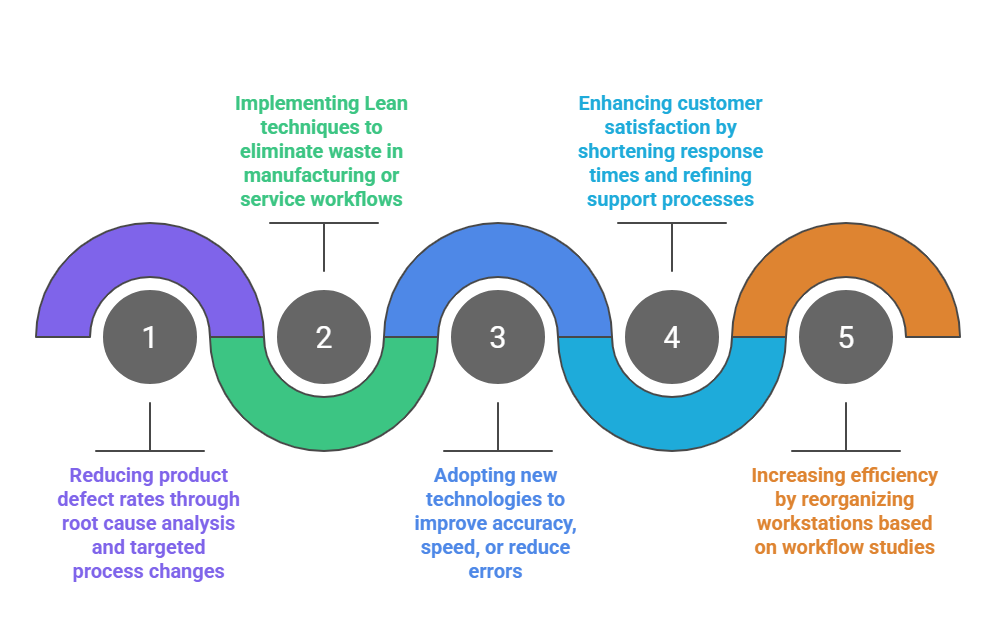 Benefits of Continual Improvement
1. Greater customer satisfaction and loyalty
2. Increased productivity and efficiency
3. Lower operational costs and resource usage
4. Enhanced compliance with regulatory and industry standards
5. Stronger competitive position

Class Sessions
Sales Campaign

We have a sales campaign on our promoted courses and products. You can purchase 1 products at a discounted price up to 15% discount.