Managing nonconformities and corrective actions is a crucial aspect of a Quality Management System (QMS) under ISO 9001.
It involves identifying instances where products, processes, or systems do not meet specified requirements, addressing these deviations promptly, and implementing actions to eliminate root causes and prevent recurrence.
Effective nonconformity management safeguards product quality, customer satisfaction, and regulatory compliance.
Nonconformity Identification and Documentation
A nonconformity occurs when a product or process fails to meet the set criteria or customer requirements. The organization must establish clear criteria to detect nonconformities early through inspections, monitoring, audits, customer feedback, or complaint investigations.
Upon identification, each nonconformity is documented in detail, describing the nature of the issue, affected products or processes, location, date, and personnel involved. This documentation serves as an official record and initiates the corrective action process.
Containment and Initial Actions
Immediate corrective actions, often referred to as containment, aim to control or isolate the nonconforming outputs to prevent adverse effects on customers or further process disruptions.
This might involve quarantining defective products, halting production, or notifying relevant stakeholders to mitigate the impact while a detailed investigation is conducted.
Root Cause Analysis and Corrective Action Planning
A thorough investigation is conducted to determine the root cause(s) of the nonconformity using techniques like the 5 Whys, Fishbone Diagrams, or Failure Mode Effects Analysis (FMEA).
Based on this analysis, an action plan is developed to eradicate the causes, not just the symptoms, to prevent recurrence. The plan details responsibilities, timelines, required resources, and effectiveness criteria.
Implementation, Monitoring, and Effectiveness Review
Corrective actions are implemented as per the action plan. Ongoing monitoring ensures these actions are effective in resolving the issues. Verification methods include audits, process monitoring, and performance reviews.
If corrective actions prove ineffective, further evaluation and alternative solutions are explored.
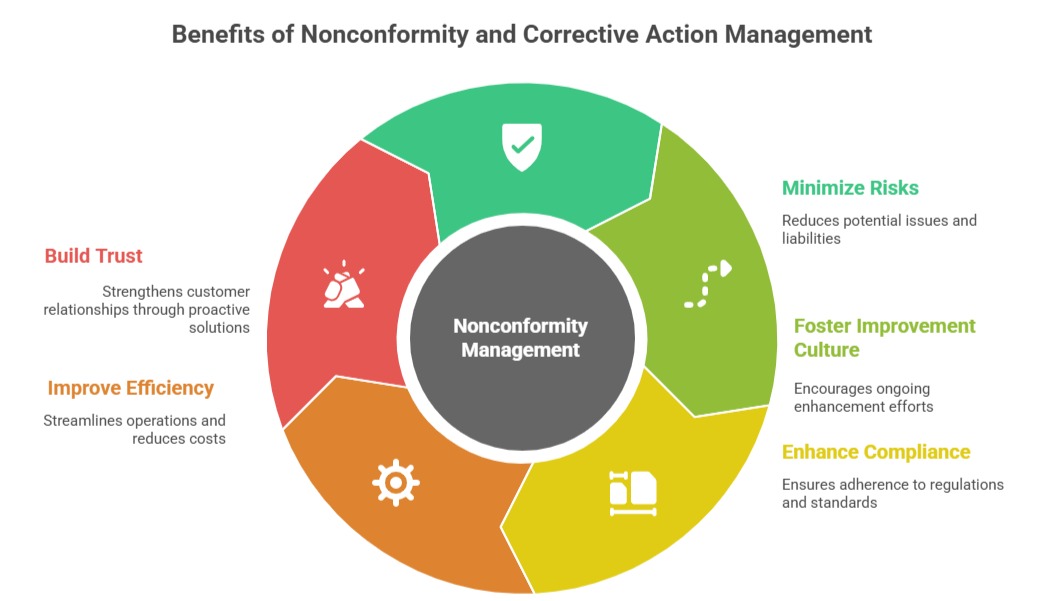
An organized and systematic approach to managing nonconformities and corrective actions strengthens the overall QMS and drives sustainable business success.

Class Sessions
Sales Campaign

We have a sales campaign on our promoted courses and products. You can purchase 1 products at a discounted price up to 15% discount.