The process approach is a fundamental concept in ISO 9001 quality management that focuses on managing activities as interconnected processes rather than isolated tasks or departments.
It recognizes that organizations function as a system of interrelated processes that collectively contribute to achieving desired outcomes.
By understanding and managing these processes as a coherent system, organizations can more effectively control inputs, optimize activities, and deliver consistent and predictable results that meet customer and stakeholder requirements.
At its core, a process is defined as a set of interrelated or interacting activities that transform inputs into outputs. Inputs can be tangible resources like materials and equipment, or intangible elements such as data and information.
Managing these processes involves defining clear objectives, assigning responsibilities, monitoring performance, and applying continual improvement cycles, typically guided by the Plan-Do-Check-Act (PDCA) methodology.
The process approach encourages organizations to consider the interactions and dependencies between different processes, ensuring that the output of one process satisfies the input requirements of the next, thus maintaining smooth and efficient workflow and reducing errors or inefficiencies.
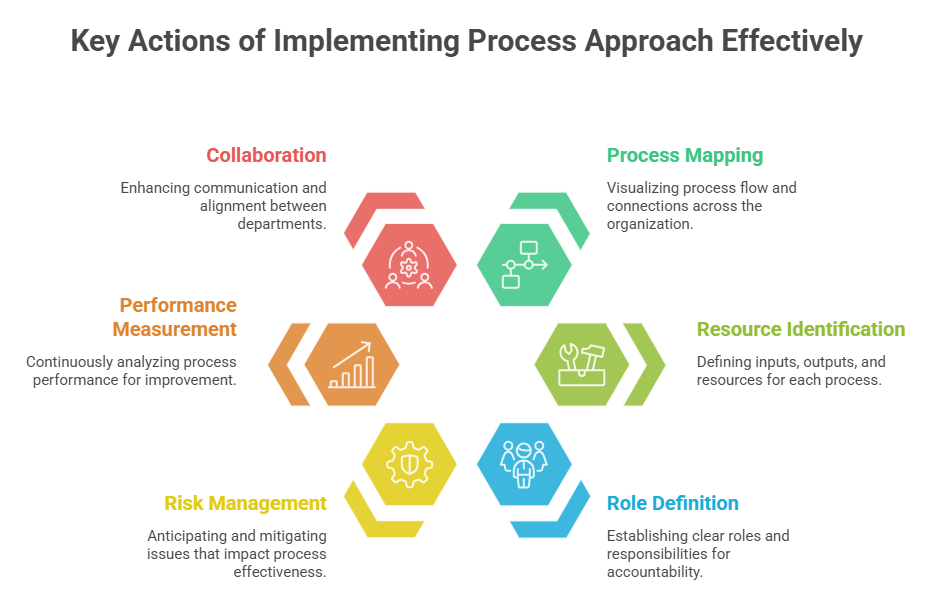
By adopting a process approach, organizations are able to streamline operations, improve quality and customer satisfaction, reduce costs, and foster an environment of ongoing improvement.
This systematic management of processes forms the backbone of a robust Quality Management System, enabling organizations to adapt to changing requirements and maintain a competitive edge.

Class Sessions
Sales Campaign

We have a sales campaign on our promoted courses and products. You can purchase 1 products at a discounted price up to 15% discount.