System information and monitoring are vital functions in Linux system administration that help diagnose performance bottlenecks, optimize resource use, and detect potential issues before they escalate.
Linux offers a wide variety of powerful tools and commands designed to monitor CPU, memory, disk, network, and processes in real-time or through snapshots.
Key System Monitoring Metrics
The following are essential performance indicators for keeping a Linux system healthy and efficient.
1. CPU Usage: Measures processor load and utilization.
2. Memory Usage: Tracks free and used RAM, swap usage.
3. Disk I/O: Monitors read/write operations on storage devices.
4. Network Traffic: Measures sent and received data packets/bytes.
5. Processes: Current running processes and their resource consumption.
Essential Monitoring Commands
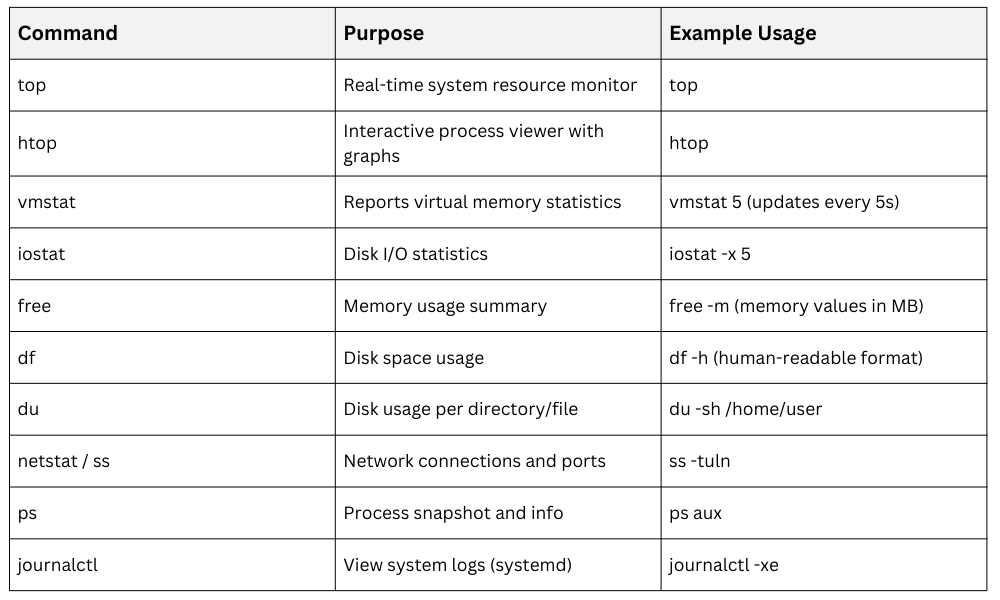 Advanced Monitoring Tools and Solutions
These advanced tools help administrators track system performance and detect issues proactively.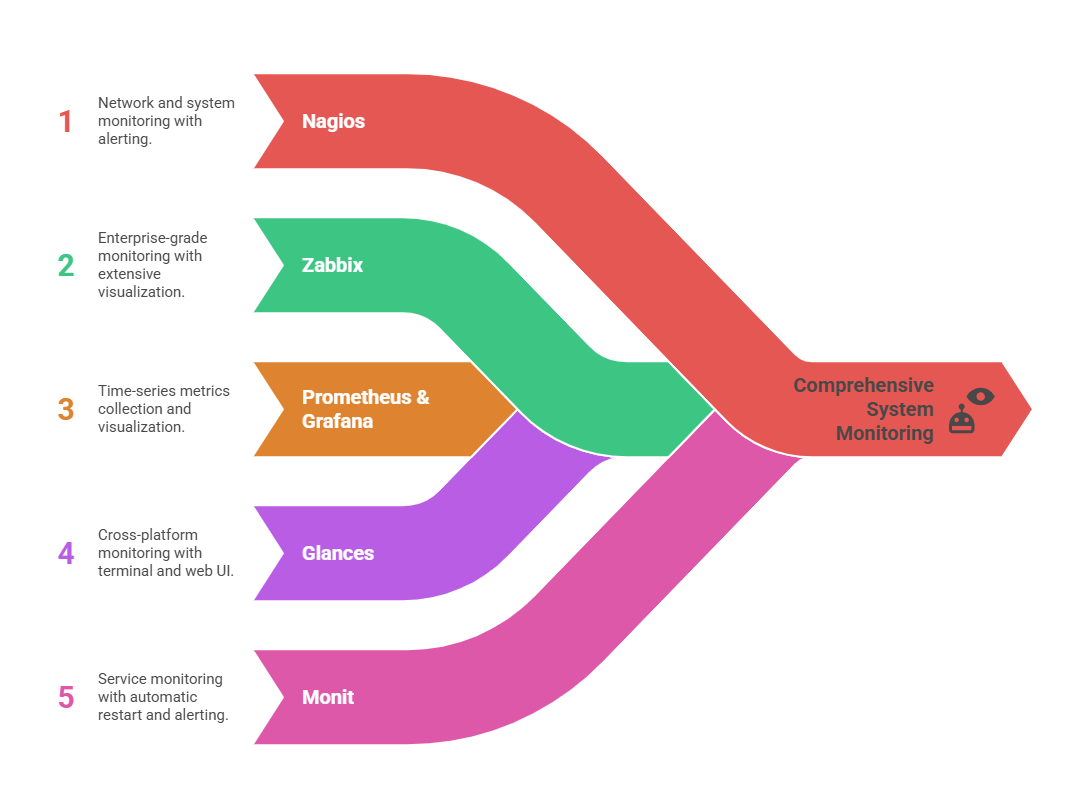
Monitoring Best Practices
1. Implement continuous monitoring with alerting on critical thresholds.
2. Use visual dashboards for easy interpretation of metrics (e.g., Grafana).
3. Collect logs and metrics centrally to analyze trends and troubleshoot effectively.
4. Automate response for common issues (e.g., automatic service restarts).

Class Sessions
Sales Campaign

We have a sales campaign on our promoted courses and products. You can purchase 1 products at a discounted price up to 15% discount.