Handling difficult audit situations and conflicts is an inevitable part of the audit process and requires auditors to apply professionalism, effective communication, and conflict resolution skills.
Challenges may arise due to disagreements over findings, resistance from auditees, or differing perceptions of risk and compliance. Successfully navigating these situations ensures that audits remain constructive, collaborative, and focused on value creation rather than confrontation.
Strategies for Handling Difficult Situations and Conflicts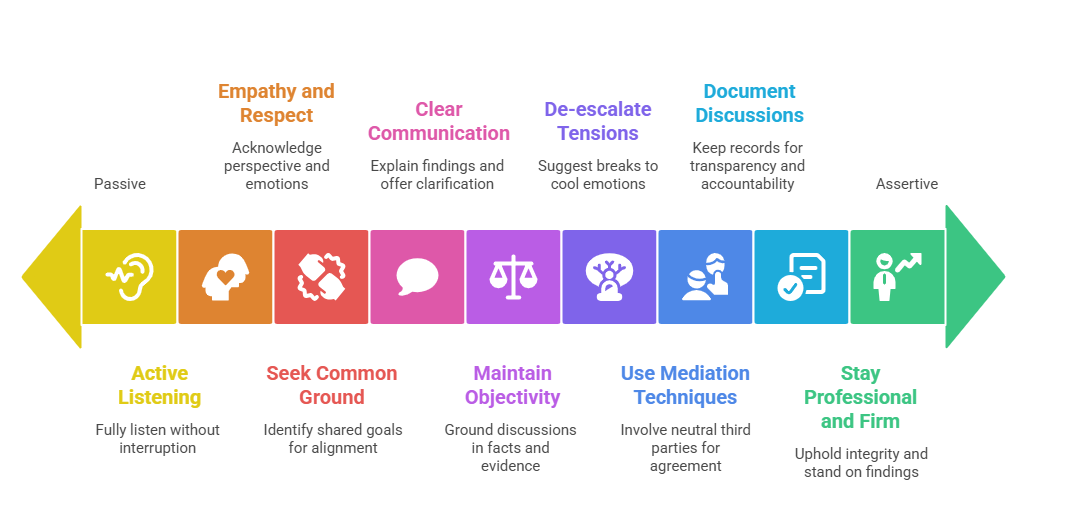 Addressing conflicts constructively helps maintain audit integrity and positive relationships with auditees. The following points outline practical methods for handling difficult situations.
1. Active Listening: Fully listen to concerns and objections raised by auditees without interruption. This demonstrates respect and helps uncover underlying issues or misunderstandings that may be fueling conflict.
2. Maintain Objectivity: Ground discussions in facts, evidence, and audit criteria rather than personal opinions or emotions. This keeps debates focused on issues rather than individuals.
3. Empathy and Respect: Acknowledge the auditee’s perspective and emotions, even if disagreements exist. Use respectful language and avoid defensive or confrontational tones to build trust.
4. Clear Communication: Clearly explain audit findings, how they were derived, and their implications. Offer opportunities for auditees to clarify or provide additional context.
5. Seek Common Ground: Identify shared goals, such as improving processes, ensuring compliance, or protecting customers, to align both parties' interests and foster collaboration.
6. De-Escalate Tensions: If discussions become heated, suggest taking a break or scheduling a follow-up meeting to allow emotions to cool and prepare for more productive dialogue.
7. Use Mediation Techniques: Involve neutral third parties if needed to mediate disputes objectively and facilitate agreement.
8. Document Discussions: Keep accurate records of contentious points, agreements, and unresolved issues to ensure transparency and accountability.
9. Stay Professional and Firm: While flexibility is important, auditors must uphold audit integrity and stand firm on critical findings when supported by evidence.
Examples of Difficult Situations
| Challenging Situation | Approach |
| Pushback on Findings | Management may dispute findings they consider exaggerated or inaccurate; address with clear evidence and open discussion. |
| Personal Attacks or Resistance | In rare cases of hostility, remain calm, set professional boundaries, and pause meetings if needed to de-escalate. |
| Differing Risk Perceptions | When auditors and auditees view risks differently, encourage open dialogue on risk impact and organizational objectives. |
By integrating these strategies, auditors maintain control of the audit process, foster positive relationships, and support the organization in addressing risks and improving compliance efficiently.

Class Sessions
Sales Campaign

We have a sales campaign on our promoted courses and products. You can purchase 1 products at a discounted price up to 15% discount.