Understanding evidence and the distinction between conformity and nonconformity is fundamental to effective auditing in Quality Management Systems (QMS).
Evidence refers to the information and data auditors collect during an audit to evaluate whether processes, products, or systems meet the defined requirements and criteria.
The evaluation of this evidence determines whether the organization conforms to the applicable standards or whether there are deviations, known as nonconformities, that need to be addressed.
Identifying Evidence
Evidence in an audit is objective and verifiable information collected through various methods, including:
| Type of Evidence | Description |
| Documents and Records | Policies, procedures, work instructions, quality manuals, logs, and reports demonstrating compliance. |
| Observations | Watching processes in operation to verify that activities are performed as documented. |
| Interviews | Discussions with employees and management to understand how processes are implemented. |
| Physical Inspection | Examining products, services, or equipment to check adherence to quality specifications. |
| Measurements and Test Results | Data and test outcomes confirming that products meet or exceed defined quality parameters. |
The quality and reliability of evidence are crucial; it should be sufficient, relevant, and objective to support audit conclusions.
Conformity vs. Nonconformity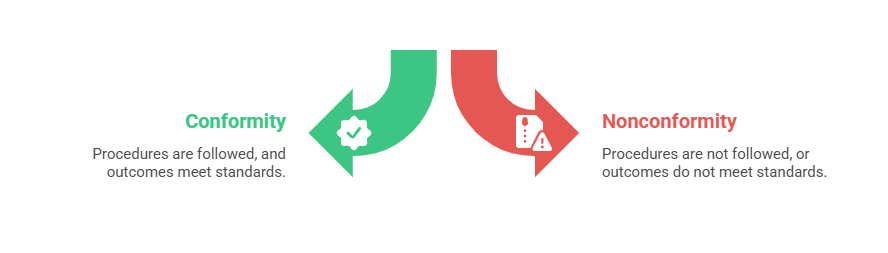 Conformity means that the audited process, product, or system satisfies the requirements and criteria set by standards such as ISO 9001, organizational policies, or regulatory mandates.
When evidence supports that procedures are correctly followed and outcomes meet standards, conformity can be declared.
Nonconformity refers to a failure to meet specified requirements. It indicates a deviation or gap in the process, documentation, product quality, or system performance.
Nonconformities must be identified and documented clearly during the audit. They can range from minor discrepancies to major failures that impact compliance or customer satisfaction.
Auditors classify findings based on their significance and impact, and nonconformities typically trigger corrective actions within the organization to remedy the issues and prevent recurrence.
By rigorously gathering evidence and distinguishing between conformity and nonconformity, auditors provide organizations with actionable insights to improve quality, ensure compliance, and sustain continual improvement.