Preparing audit checklists and audit plans is a crucial stage in ensuring that audits are thorough, efficient, and aligned with their intended objectives.
These tools help auditors organize their approach, focus on relevant processes, and systematically gather evidence to evaluate compliance with specified standards or organizational requirements.
Professional preparation enables audits to be conducted smoothly and provides confidence to stakeholders about the audit’s accuracy and completeness.
Audit Checklist
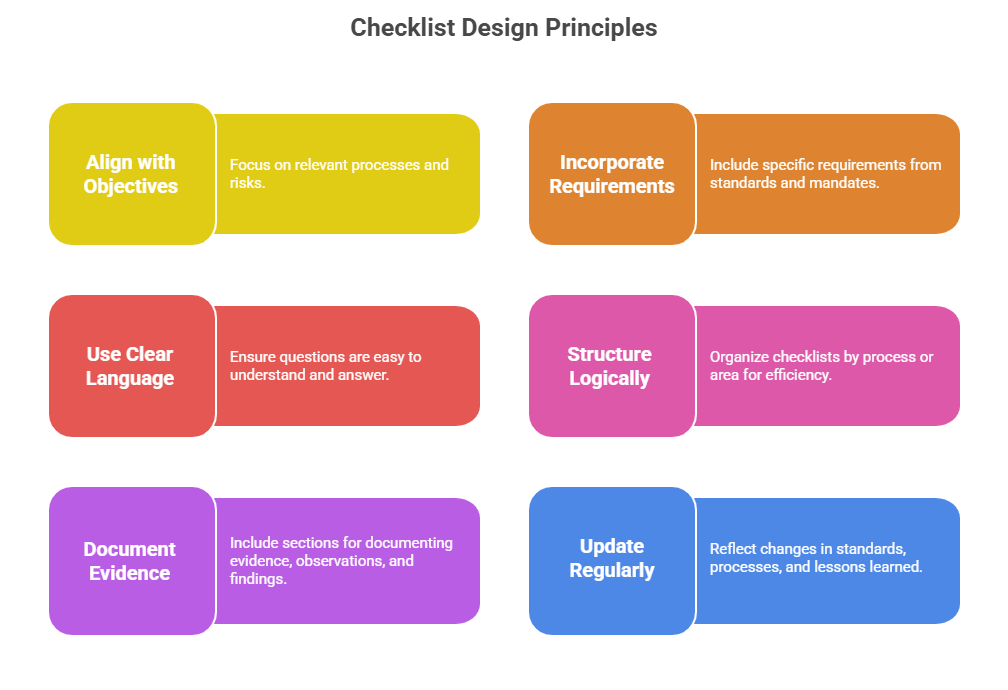
An audit checklist is a comprehensive yet concise tool that lists the items, questions, or requirements auditors need to verify during the audit.
Checklists are typically based on audit criteria, including applicable ISO standards, regulatory requirements, internal policies, and previous audit findings.
Effective checklists promote consistency and help auditors avoid overlooking important aspects during fieldwork.
Audit Plans
An audit plan outlines the overall approach and logistics of the audit, serving as a roadmap for audit teams and auditees. It formalizes the scope, objectives, criteria, audit methods, schedule, and responsibilities.
Effective planning helps allocate resources efficiently, manage time, and streamline communication between auditors and auditees.
Key Elements of an Audit Plan
| Audit Element | Description |
| Audit Scope | Defines which parts of the organization, processes, or systems will be audited. |
| Audit Objectives | Specifies what the audit aims to achieve, such as compliance verification or performance improvement. |
| Audit Criteria | Standards, policies, or requirements against which conformity will be evaluated. |
| Audit Schedule | Details the audit dates, timing, and duration, including opening and closing meetings. |
| Audit Team | Outlines the roles and responsibilities of auditors, including the lead auditor and any observers. |
| Audit Methods | Describes the techniques used for evidence collection—interviews, document reviews, and observations. |
| Resources Required | Identifies the necessary access to documents, personnel, and facilities for conducting the audit. |
| Communication Plan | Explains how and when audit progress, findings, and results will be communicated to stakeholders. |
Disseminating the audit plan in advance to relevant stakeholders allows proper preparation, builds transparency, and sets expectations for the audit process.

Class Sessions
Sales Campaign

We have a sales campaign on our promoted courses and products. You can purchase 1 products at a discounted price up to 15% discount.