An audit is a systematic and independent examination of processes, systems, or procedures to determine whether they conform to planned arrangements, standards, or regulatory requirements.
In the context of Quality Management Systems (QMS), audits are essential to verify that the QMS is implemented effectively, to identify areas for improvement, and to ensure ongoing compliance with relevant standards such as ISO 9001.
Audits provide objective evidence that the organization is meeting its quality objectives, maintaining operational control, and enhancing customer satisfaction.
Three Main Types of Audits 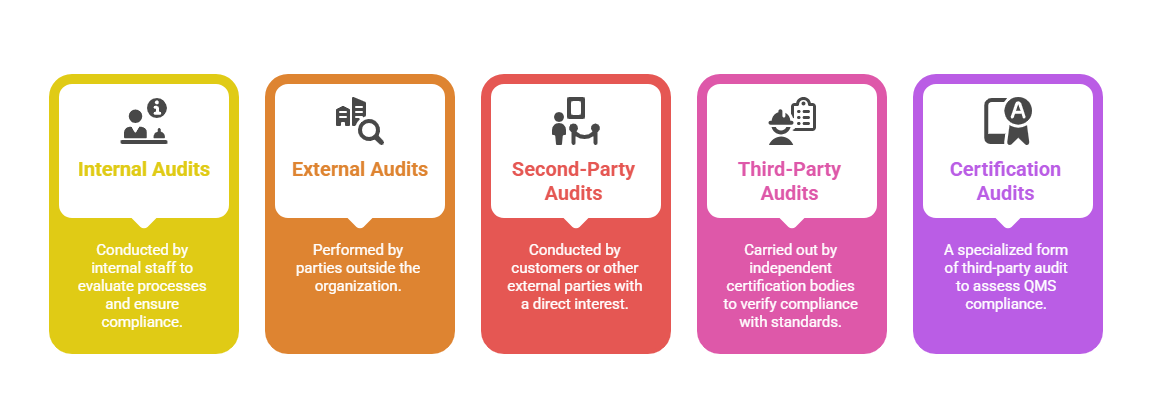 In quality management, different types of audits serve unique purposes in assessing performance, compliance, and improvement opportunities. The following outlines the three primary forms of auditing.
Internal Audits (First-Party Audits): These are conducted by an organization's own staff or internal auditors to evaluate internal processes and ensure compliance with the organization's quality policies and objectives.
Internal audits help identify nonconformities early, facilitate corrective actions, and improve overall system effectiveness before external audits.
External Audits: External audits are performed by parties outside the organization and can be further divided into:
Second-Party Audits: Conducted by customers or other external parties who have a direct interest in the organization. These audits assess supplier or contractor compliance with contractual requirements.
Third-Party Audits (Certification Audits): Carried out by independent certification bodies to verify compliance with standards like ISO 9001. Successful completion leads to formal certification, enhancing market credibility and customer confidence.
Certification Audits: A specialized form of third-party audit that assesses whether an organization’s QMS meets all requirements of a specific standard. Certification audits typically involve an initial audit (Stage 1 and Stage 2 assessments) and ongoing surveillance audits to maintain the certification status.
Audits are performed through a planned process that includes preparation, execution, reporting, and follow-up to ensure corrective actions are taken where nonconformities are found. They play a critical role in continuous improvement, risk management, and demonstrating compliance to stakeholders.