The key principles of quality management serve as the foundation for building and maintaining effective Quality Management Systems (QMS), such as those defined by the ISO 9001 standard.
These principles are universally accepted guidelines that help organizations deliver consistent quality, improve processes, and satisfy customer needs.
Quality management principles enable organizations to focus efforts strategically, align resources, and foster a culture of continuous improvement.
Fundamental Principles of Quality Management According to ISO 9001:2015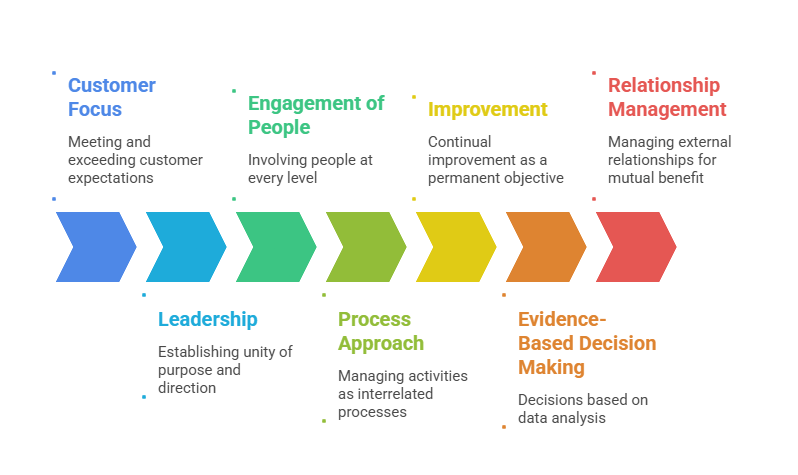
ISO 9001:2015 is built on a set of core principles that form the foundation for effective quality management. Below is a list of the key principles that guide organizations toward consistent performance and continual improvement.
1. Customer Focus: The primary objective of quality management is to meet and exceed customer expectations. Organizations should understand customer needs, strive to enhance satisfaction, and build long-term customer relationships to ensure sustainable success.
2. Leadership: Strong leadership establishes unity of purpose and direction. Leaders at all levels should create an environment that encourages employee involvement, aligns quality objectives with the organization’s vision, and motivates continuous improvement.
3. Engagement of People: Involving people at every level is vital for organizational success. Engaged and empowered employees contribute their knowledge and skills to improve processes, achieve quality goals, and foster innovation.
4. Process Approach: Managing activities as interrelated processes helps organizations achieve efficient and predictable results. The process approach supports better resource use, clear responsibility assignment, and continuous improvement through monitoring and measurement.
5. Improvement: Continual improvement should be a permanent organizational objective. Organizations must identify opportunities for enhancing QMS effectiveness, product quality, and operational efficiency, enabling them to remain competitive in dynamic markets.
6. Evidence-Based Decision Making: Effective decisions are based on the analysis of data and information. This principle promotes informed choices by using reliable evidence, reducing risks, and optimizing results.
7. Relationship Management: An organization and its external providers, partners, and stakeholders are interdependent. Managing these relationships actively helps maximize value creation and ensure mutually beneficial outcomes.
Together, these principles guide organizations in developing sound strategies and operational practices that deliver quality products and services.
By integrating these principles into daily activities, companies can improve customer satisfaction, comply with regulations, enhance operational efficiency, and sustain growth.

Class Sessions
Sales Campaign

We have a sales campaign on our promoted courses and products. You can purchase 1 products at a discounted price up to 15% discount.