The field of data science is broad, and so are the roles within it. Modern organizations rely on a variety of data professionals each with unique responsibilities and skill sets to create a complete data ecosystem.
Understanding these roles helps learners identify career paths and appreciate how data science is applied across industries.
Key Roles in Data Science
Key roles in data science define the diverse expertise required to turn raw data into actionable insights.
Each role from engineering and analysis to domain expertise—ensures data-driven solutions are accurate, scalable, and aligned with business goals.
1. Data Scientist: Data scientists build predictive models, analyze patterns, run experiments, and translate data into actionable insights. They bridge technical modeling and business decision-making.
2. Data Analyst: Analysts focus on dashboards, data exploration, reports, and descriptive analytics. They answer “what happened?” and “why?” through visualization and statistics.
3. Data Engineer: Data engineers design and maintain pipelines, databases, cloud systems, and ETL processes. They ensure that data is reliable, accessible, and well-structured for analysis.
4. Machine Learning Engineer: They deploy, scale, and optimize machine learning models in production. Their work ensures that models perform well under real-world conditions.
5. Business Analyst / Product Analyst: These professionals translate business requirements into data problems and ensure alignment between stakeholders and technical teams.
6. Domain Expert: Domain experts provide industry-specific knowledge—healthcare, finance, marketing, manufacturing—which is essential for problem framing and model validation.
Applications Across Industries
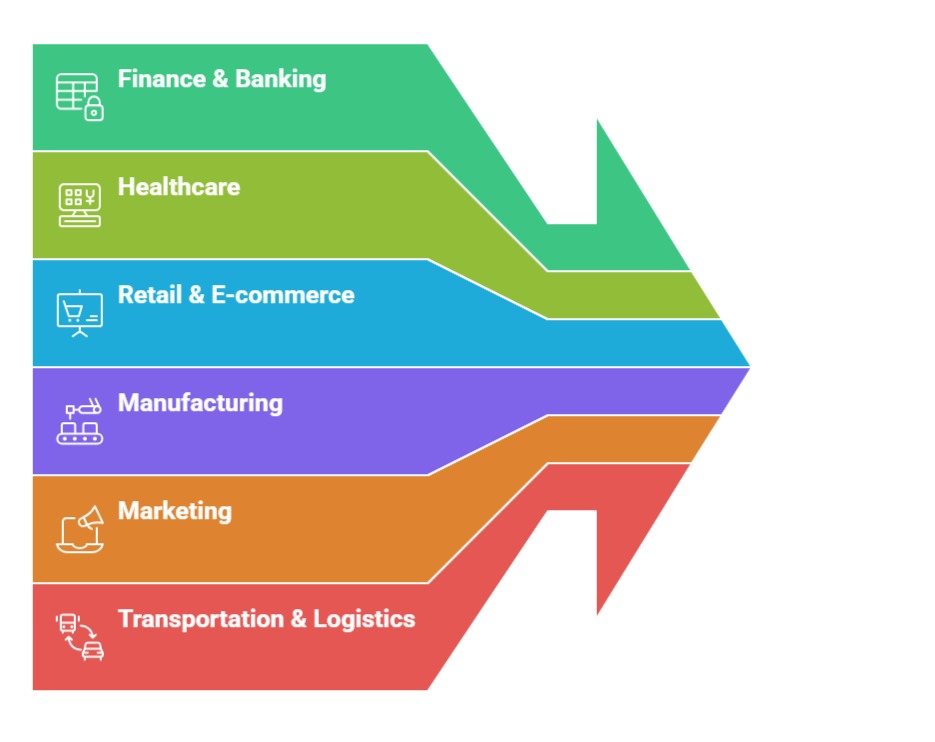
Data Science plays a transformative role across industries by enabling smarter decisions, automation, and predictive capabilities.
From healthcare and finance to retail and government, its applications help organizations improve efficiency, personalization, and strategic planning.
1. Finance & Banking: Fraud detection, credit scoring, algorithmic trading, risk modeling, personalized financial advice.
2. Healthcare: Disease prediction, medical imaging diagnostics, drug discovery, patient risk stratification.
3. Retail & E-commerce: Recommendation systems, pricing optimization, customer segmentation, demand forecasting.
4. Manufacturing: Predictive maintenance, quality control, supply chain optimization.
5. Marketing: Customer lifetime value prediction, ad targeting, sentiment analysis, lead scoring.
6. Transportation & Logistics: Route optimization, autonomous vehicles, fleet management, demand estimation.