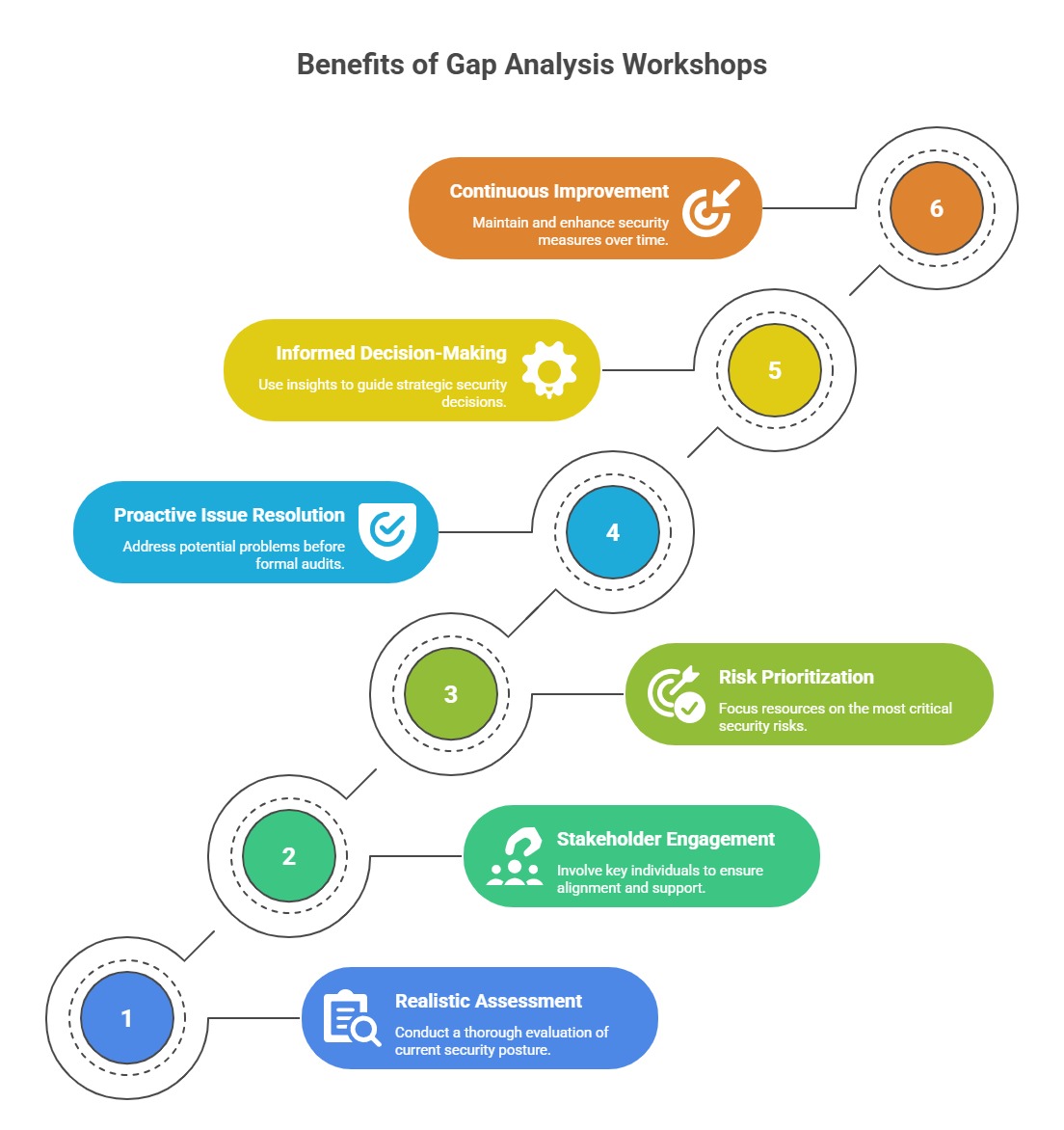
Gap analysis workshops are a vital step in the journey to ISO/IEC 27001 certification and effective ISMS implementation. They provide a structured way for organizations to assess their current information security posture against the requirements of the ISO 27001 standard, identifying discrepancies and planning remediation activities.
Purpose of Gap Analysis Workshops
The goal is to uncover “gaps” where existing security policies, practices, and controls fall short of what ISO 27001 requires. This provides a clear, evidence-based starting point for prioritizing resources, defining action plans, and engaging stakeholders in the certification journey or continual improvement.
Workshop Structure and Methodology
A well-organized workshop is essential for effectively assessing and improving ISO/IEC 27001 compliance. Below are the key structural elements and methodologies to guide a successful workshop.
1. Define Scope and Objectives: Clearly indicate which parts of the organization, business processes, physical locations, and systems the workshop will cover. Establish objectives such as readiness assessment, compliance benchmarking, or risk-based prioritization.
2. Assemble a Multidisciplinary Team: Include representatives from information security, IT, compliance, HR, operations, and relevant business units. External consultants can add impartial expertise.
3. Review ISO 27001 Requirements: The team reviews clauses 4 through 10 of ISO 27001 and Annex A controls, understanding the detailed requirements and their implications for the organization.
4. Assess the Current State: Evaluate existing policies, procedures, technical measures, and management practices against ISO standards by:
Document reviews
Interviews and discussions with process owners and stakeholders
Observation of implemented controls and practices
5. Identify Gaps and Nonconformities: Record areas where current practice does not meet ISO 27001 requirements, such as missing documentation, incomplete risk assessments, inadequate controls, or a lack of formal management review mechanisms.
6. Prioritize Findings: Based on risk, business impact, and resource availability, prioritize gaps into high, medium, and low categories to focus efforts effectively.
7. Develop an Action Plan: Create detailed recommendations and assign responsibilities, timelines, and milestones to address each identified gap.
8. Document and Report: Produce a comprehensive gap analysis report summarizing findings, priorities, and remediation steps. This report serves as a roadmap for ISMS implementation or enhancement.
Best Practices for Effective Workshops
Effective workshops rely on consistency, clear objectives, and engaged participants. The following points highlight best practices to facilitate productive and impactful sessions.
1. Schedule dedicated time and resources with executive support.
2. Keep sessions focused but allow open dialogue for honest feedback.
3. Use checklists and templates to maintain consistency and thoroughness.
4. Follow up on action items regularly to maintain momentum.
5. Combine workshops with training to increase awareness and skills.