Monitoring and measuring the effectiveness of an Information Security Management System (ISMS) is a critical ongoing activity that ensures the system is functioning as intended, meeting its objectives, and continually improving.
ISO/IEC 27001 highlights these requirements primarily in Clause 9.1, emphasizing that organizations must evaluate how well their ISMS manages information security risks and supports business goals.
Purpose of Monitoring and Measurement
The core aim is to provide objective evidence that security controls and ISMS processes are effective and aligned with the organization’s risk appetite and compliance obligations.
By monitoring and analyzing relevant data regularly, organizations can identify weaknesses, verify improvements, and make informed decisions regarding security strategies.
What to Monitor and Measure?
Continuous evaluation through monitoring and measurement helps organizations identify gaps and verify progress toward security objectives. Here are key elements to track within an ISMS.
1. Information Security Performance
Number and severity of information security incidents: Tracking incidents helps evaluate control effectiveness and incident response readiness.
Time taken to detect and respond to incidents: Measures the efficiency of detection systems and response procedures.
Compliance with legal, regulatory, and contractual requirements: Ensures obligations are met.
Security awareness training completion rates indicate staff engagement and competence.
2. ISMS Effectiveness
Percentage of controls implemented and operational: Verifies that planned controls are in place and functioning.
Achievement of information security objectives: Tracks progress toward defined targets.
Audit findings and nonconformities: Helps uncover gaps and areas for improvement.
Resource utilization and process performance: Assesses efficiency of ISMS operations.
3. Risk Management Metrics
Changes in risk levels: Monitors how risk exposure evolves due to controls or external factors.
Effectiveness of risk treatment actions: Assesses whether risk mitigation strategies work.
Selecting Key Performance Indicators
| KPI Criterion | Description |
| Specific | Clearly defined and directly related to ISMS goals to ensure focused performance measurement. |
| Measurable | Quantifiable or qualifiable, enabling the collection of actionable and comparable data over time. |
| Achievable | Realistic and attainable within the organization’s available resources and capabilities. |
| Relevant | Aligned with critical information security aspects that significantly impact organizational objectives. |
| Time-bound | Evaluated at consistent and defined intervals to track progress and drive continual improvement. |
Common KPIs include incident count reduction, audit compliance rates, or employee training scores.
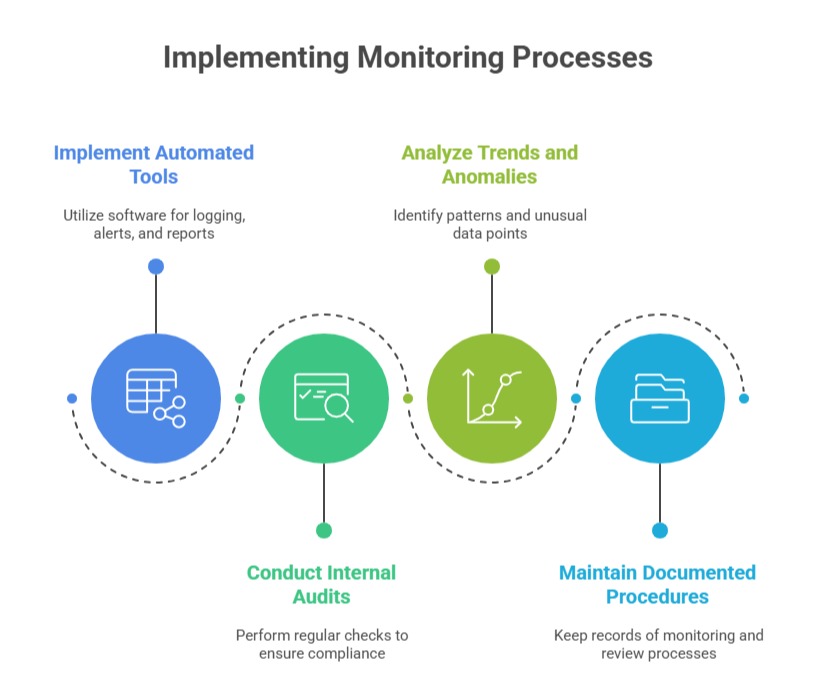
Reporting and Communication
Results from monitoring activities should be communicated to management and relevant stakeholders in understandable formats, such as dashboards or summarized reports, enabling timely decisions and prioritization.
Continual Improvement
Monitoring outcomes feed into the Plan-Do-Check-Act (PDCA) cycle, highlighting nonconformities or inefficiencies and enabling corrective and preventive actions. Over time, this process strengthens the ISMS, adapting to changes in threats, technology, and business context.

Class Sessions
Sales Campaign

We have a sales campaign on our promoted courses and products. You can purchase 1 products at a discounted price up to 15% discount.